A Single Late Fee Triples the Effective APR on a BNPL Loan
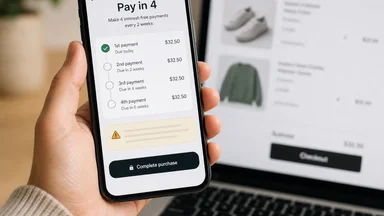
Buy Now, Pay Later (BNPL) loans have become a fixture of online checkout, offering shoppers the chance to split a purchase into four interest-free installments. The appeal is obvious: no interest, no upfront cost, and instant approval. But beneath the surface of this convenient payment option lies a fee structure that can turn a routine purchase into a high-cost loan. A single late fee — often in the range of US$7 to US$10 — can push the effective annual percentage rate (APR) into triple digits, rivaling or exceeding the cost of payday loans. This article traces the money: how late fees are calculated, who collects them, and what regulators are doing about it.
The Loan That Costs Nothing — Until It Costs Everything
BNPL providers like Klarna, Affirm, and Afterpay promote their products as a 0% APR alternative to credit cards. For a typical purchase of US$50, the borrower pays four installments of US$12.50 over six weeks. If all payments arrive on time, the total cost is exactly the purchase price. The product lives up to its promise — for the punctual borrower.
The catch arrives with a single missed payment. Most BNPL lenders charge a late fee, typically between US$7 and US$10 per missed installment, and some impose a cap on total fees. On a US$50 purchase, a US$8 late fee represents 16% of the principal. But because the loan is repaid in weeks rather than years, the annualized cost is far steeper.
The Consumer Financial Protection Bureau (CFPB) has flagged this dynamic. In a 2024 market report, the agency noted that late fees are the primary revenue source for BNPL lenders, accounting for an estimated 15–25% of their income. For consumers who miss a payment, the effective APR can soar to 150–300%, depending on the loan size and fee amount. A US$10 fee on a US$40 loan, for example, yields an APR of roughly 260% when annualized over a six-week term.
This is not a hypothetical edge case. Surveys suggest that roughly 10–15% of BNPL users incur at least one late fee, and the proportion is higher among borrowers with lower credit scores. The product that starts as a zero-cost convenience can become a debt trap for those who can least afford it.
How a Single Missed Payment Resets the Math
To understand the cost, consider a typical BNPL loan: US$40 for a small household item, split into four US$10 payments due every two weeks. The total repayment period is six weeks. If the borrower misses the second payment, the lender charges a US$8 late fee. The borrower now owes US$18 (US$10 installment plus US$8 fee) on a US$40 loan.
Annualizing that cost requires calculating the number of six-week periods in a year: roughly 8.67 (52 weeks divided by 6). The effective APR is the fee divided by the remaining principal, multiplied by the number of periods. In this case, US$8 / US$40 = 0.20, times 8.67 = 173% APR. If the fee is US$10, the APR jumps to 217%.
The math gets worse when multiple fees stack. Some lenders charge a late fee for each missed installment, and if the loan goes into collections, additional costs may apply. The terms of service typically disclose the fee amount but do not present an annualized rate — a practice that critics say obscures the true cost.
Compare this to a credit card penalty APR, which typically ranges from 25% to 30%. A personal loan from a bank might carry an APR of 5–36% depending on creditworthiness. Even a payday loan, notorious for high rates, often carries an APR of 300–400% — but payday lenders are required to disclose that rate. BNPL lenders, until recently, were not.
Who Collects When You Miss: The Merchant, the Lender, the Aggregator
The BNPL ecosystem involves three main players: the merchant, the lender, and the aggregator (the platform that connects them). Merchants pay the lender a fee of 3–6% of the transaction value to offer BNPL at checkout. That fee covers the lender's processing costs and risk, and it is the primary reason merchants accept BNPL — they hope the convenience increases conversion and average order value.
Late fees, however, flow entirely to the lender. For a lender like Klarna or Affirm, late fees represent a significant profit center. In its 2024 annual report, Klarna disclosed that late fees accounted for roughly 18% of its revenue, while Affirm reported a similar share. These fees are pure margin, since the cost of sending a reminder email or SMS is negligible.
Aggregators, such as Shopify's Shop Pay Installments, bundle BNPL loans into securitized pools that are sold to institutional investors. The late-fee revenue in those pools increases the yield for investors, creating a demand for loans that generate fees. That structural incentive may push lenders to design products that are easy to miss — short repayment windows, no grace period, and auto-debit only if the borrower opts in.
Merchants, meanwhile, are largely insulated from late-fee revenue. Their incentive is simply to close the sale. But they bear reputational risk: if customers associate a brand with hidden fees, they may not return. Some merchants have begun to cap late fees or waive the first one as a goodwill gesture.
The Credit Report Gap: What BNPL Does Not Tell the Bureaus
One of the most striking features of BNPL is its invisibility on traditional credit reports. Most BNPL lenders do not report on-time payments to the three major credit bureaus — Equifax, Experian, and TransUnion. That means a borrower who faithfully repays a dozen BNPL loans builds no positive credit history. Conversely, late payments are also not reported by most lenders, though some may send delinquent accounts to collections, which does appear on credit reports.
As of late 2024, Experian launched a pilot program called "BNPL Reporting" that covers roughly 20% of BNPL loans in the United States. The program is voluntary for lenders, and participation remains limited. Affirm and Klarna have both signaled interest but have not committed to full reporting. The result is a gap: a consumer with a strong BNPL repayment record may still have a thin or subprime credit file, leading to higher rates on mortgages and auto loans.
The CFPB has criticized this asymmetry. In its 2024 interpretive rule, the agency stated that BNPL lenders should be treated as card issuers under the Truth in Lending Act, which would require them to disclose APR and report to credit bureaus. The rule is being challenged in court by industry groups, who argue that BNPL is a payment method, not a credit product.
For consumers, the practical implication is caution. A BNPL loan that goes to collections can damage a credit score for years, while on-time payments offer no benefit. Borrowers should assume that their BNPL activity is invisible to future lenders unless they verify otherwise.
Regulatory Spotlight: CFPB and State Attorneys General
Regulatory scrutiny of BNPL has intensified since 2022, when the CFPB first opened a market monitoring inquiry. In 2024, the agency issued an interpretive rule classifying BNPL lenders as card issuers, bringing them under the disclosure requirements of the Truth in Lending Act. That means lenders must now provide a clear statement of the APR, including late fees, before the consumer completes a purchase.
State attorneys general have also taken action. California and New York have launched investigations into fee structures, focusing on whether late fees are reasonable and whether lenders adequately disclose the cost of missing a payment. Some states have proposed caps: a late fee of no more than US$8 per occurrence, similar to the cap on credit card late fees under the Credit Card Accountability Responsibility and Disclosure (CARD) Act of 2009.
The industry has pushed back, arguing that BNPL is fundamentally different from credit cards because it has no revolving balance and no interest. They contend that a late fee is a penalty for breach of contract, not a finance charge, and should not be annualized. The legal distinction matters: if late fees are treated as finance charges, lenders must calculate and disclose the APR, which would make the triple-digit rates plainly visible.
As of mid-2026, the rule is in litigation, and compliance varies by lender. Some have voluntarily adopted clearer disclosures, while others continue to present the 0% APR pitch without highlighting the penalty cost. Consumers should read the terms of service carefully — or better yet, ask the three questions outlined in the final section.
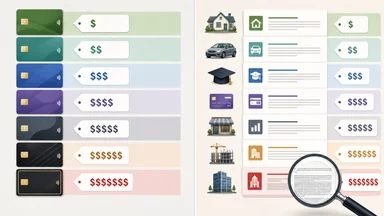
Comparing the True Cost: BNPL vs. Credit Card vs. Personal Loan
To put BNPL in perspective, compare it to other common credit products. A credit card with a 20% APR and a 30-day grace period charges roughly 1.67% monthly interest. On a US$50 purchase paid off in six weeks, the interest would be about US$1.25 — far less than a typical BNPL late fee of US$8. For an on-time payer, BNPL is cheaper than carrying a credit card balance. But for a late payer, BNPL becomes the most expensive option.
A personal loan from a bank or credit union carries an APR of 5–36%, with no late fees for a missed payment (though it may trigger a penalty APR). On a US$500 loan over one year, the interest ranges from US$25 to US$180. That is comparable to a single BNPL late fee on a small purchase, but the loan amount is ten times larger. For larger purchases, a personal loan may be cheaper than BNPL if the borrower is at risk of missing a payment.
Payday loans, often cited as the gold standard of high-cost credit, carry an APR of 300–400% on a two-week term. BNPL late fees can reach similar levels, but the loan principal is typically smaller. The key difference is disclosure: payday lenders must post the APR on the storefront, while BNPL lenders have historically buried the cost in fine print.
The choice depends on the borrower's payment behavior. For someone who always pays on time, BNPL is a free short-term loan. For someone who is even occasionally late, a credit card with a low APR and no late fee (or a grace period) may be safer. The trade-off is convenience versus cost — and the borrower's own discipline.
Real-World Examples: When a Small Purchase Becomes Expensive
To see the impact of late fees in practice, consider a few scenarios. A shopper buys a US$75 pair of shoes using BNPL, splitting it into four payments of US$18.75. They miss the second payment, incurring a US$7 late fee. The effective APR on that missed payment is roughly 152% (US$7 / US$75 = 0.0933, times 8.67 periods = 81% — but because only the remaining principal is at risk, the actual APR is higher if the fee is applied to the remaining balance). More precisely, if the fee is charged on the second installment, the remaining principal is US$56.25, so the APR is US$7 / US$56.25 = 0.1244, times 8.67 = 108%.
Another example: a US$200 electronics accessory, split into four US$50 payments. Missing the third payment triggers a US$10 late fee. The remaining principal at that point is US$100, so the APR is US$10 / US$100 = 0.10, times 8.67 = 86.7%. While still high, it is lower than on smaller purchases because the fee is a smaller percentage of the principal. This illustrates a key point: BNPL late fees are regressive — they hurt more on small transactions, which are the most common use case.
Data from the CFPB's 2024 report indicates that the median BNPL transaction size is roughly US$35–50, meaning most late fees apply to small principals. For a US$35 purchase with a US$8 late fee, the APR exceeds 200%. Consumers should be especially cautious when using BNPL for low-cost items, as the penalty relative to the purchase price is highest.
Behavioral Economics: Why Consumers Overlook Late Fees
BNPL's design exploits common cognitive biases. The 0% APR framing triggers an anchoring effect: consumers focus on the zero rate and ignore the penalty cost. The split payment structure plays into the 'pain of paying' theory — smaller, more frequent payments feel less costly than a single lump sum, even when the total is the same. This can lead to overconfidence in one's ability to pay on time.
Research in behavioral economics suggests that people systematically underestimate the probability of future events, including missed payments. A 2023 study by the Federal Reserve Bank of Boston found that BNPL users were significantly more likely to underestimate their likelihood of incurring a late fee compared to credit card users. The study also found that BNPL users had lower financial literacy scores on average, compounding the risk.
For lenders, this is a feature, not a bug. The late-fee revenue model relies on a predictable percentage of borrowers missing payments. BNPL providers use machine learning to estimate default rates and set fees accordingly. They also design the user experience to minimize friction at checkout while making it harder to cancel or modify payments later. For example, some lenders require linking a debit card and automatically deduct payments, but if the account has insufficient funds, the borrower incurs both a BNPL late fee and a bank overdraft fee — a double hit that can exceed US$30.
Consumers can counter these biases by setting calendar reminders, enabling notifications, and maintaining a buffer in their linked account. But the most effective strategy is to treat BNPL like cash: only use it for purchases you could pay for immediately without affecting your budget.
Three Questions to Ask Before Clicking 'Pay in 4'
Before opting for BNPL, consumers should ask three questions. First: What is the late fee amount, and how many fees can be charged? Look for the fee in the terms of service or the checkout screen. If it is not displayed, consider another payment method.
Second: Is my payment method set to auto-debit? Many BNPL lenders require a debit card or bank account for automatic payments. If the account has insufficient funds, the payment may be declined and trigger a late fee plus a bank overdraft fee. Setting up alerts for each installment date can prevent this.
Third: Does the lender report to credit bureaus? If not, the loan will not help build credit. If the borrower is planning to apply for a mortgage or auto loan in the near future, they should prioritize credit-building products over BNPL.
Finally, use BNPL only for purchases you can afford to pay off today. The convenience of splitting a payment should not mask the reality that a missed installment can cost more than the item itself. As with any financial product, the best protection is a clear understanding of the price — including the price of being late.
This article is for informational purposes only and does not constitute personalized financial advice. Consult a qualified professional for advice tailored to your situation.