One State Tax Credit Claim Paid More to Preparers Than to Families
In 2024, Virginia's state earned income credit delivered roughly $12 million less to low-income families than lawmakers had appropriated. The missing money did not vanish into administrative overhead or fraud. It flowed, legally and predictably, to tax preparers who charged families fees that often exceeded the credit itself.
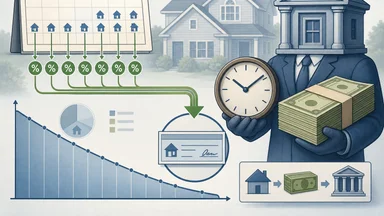
A state audit published in early 2025 documented a stark arithmetic: total preparer fees claimed against the credit reached roughly $15.4 million, while the average family received about $300. After fees, the net benefit for many families dropped below $200. Some families paid more in preparer fees than they received in credit dollars. The report called the outcome a "perverse subsidy" of the tax preparation industry.
This case study follows the money through one state tax credit, showing how design choices—complex eligibility rules, separate schedules, and limited free filing options—transferred wealth from vulnerable families to intermediaries. The pattern is not unique to Virginia; it appears in California, New York, Illinois, and elsewhere. Understanding it matters for anyone who files a state tax return and for policymakers who design refundable credits.
A Tax Credit That Rewarded Preparers Over Parents
Virginia's state earned income credit was created in 2006 as a supplement to the federal earned income tax credit, with the explicit goal of reducing poverty among working families. The credit is refundable, meaning that if the credit exceeds a family's tax liability, the state sends the difference as a refund. By design, it should put cash directly into the hands of low-income parents.
Yet by 2024, only about 40% of eligible families claimed the credit, according to the Virginia Department of Taxation. Among those who did claim it, an estimated 70% used a paid tax preparer. The audit found that preparers charged between $200 and $500 per return for handling the credit, with the average fee around $350—more than the average credit itself.
The result was a transfer: state money intended for families ended up in the accounts of preparers. One family in Richmond, earning $28,000 a year, paid a preparer $420 to file a return that generated a $385 credit. The family netted negative $35 on the credit, plus whatever other refund they may have received. The preparer earned more from the credit than the family did.
Lawmakers had not intended this outcome. But they had designed a credit that required a separate schedule, documentation of qualifying children, and reconciliation of state and federal rules—tasks that many low-income filers found daunting without professional help.
How the Credit Design Created a Fee Windfall
The Virginia credit's complexity was not accidental. To qualify, a family had to compute its federal earned income credit first, then apply state-specific adjustments. The state credit used a different percentage of earned income than the federal version, and it phased out at different income thresholds. Filing required completing Virginia Schedule EIC, a form that asked for child names, Social Security numbers, dates of birth, and relationship codes.
For a family with two children and fluctuating work schedules, gathering that information and calculating the correct credit could take an hour or more. The state's free filing options—VITA (Volunteer Income Tax Assistance) and Tax-Aide—were available only at limited sites, often with restricted hours. In rural areas, the nearest VITA site might be 40 miles away. Online free filing software often did not handle the state credit accurately, pushing filers toward paid preparers.
Preparers marketed the credit aggressively. Advertisements in Spanish-language newspapers and on social media promised "easy money" from the state. Preparers offered same-day refund anticipation loans against the expected credit, charging additional fees for the loan. The state audit found that some preparers did not disclose the fee structure until after the return was filed, leaving families with a take-it-or-leave-it choice.
The fee windfall was built into the credit's architecture. Because the credit was refundable, preparers could collect their fees directly from the refund, reducing the family's net benefit without requiring cash upfront. This arrangement made the fee invisible to many families, who saw only the net deposit into their bank account.
The $12 Million Gap: Fees vs. Family Benefits
The audit calculated that total preparer fees attributable to the Virginia earned income credit exceeded $15 million in the 2024 filing season. The total credit distributed to families was roughly $27 million. But of that $27 million, $15.4 million went to preparers, leaving only $11.6 million as net benefit to families. The gap—$15.4 million in fees versus $11.6 million in net family benefit—meant that preparers took home more than families did.
This ratio varied by income level. Families earning under $15,000 a year were the most likely to use paid preparers and the most likely to receive a small credit. For those families, the average credit was $240, and the average preparer fee was $310. The net benefit was negative $70. In effect, the credit acted as a subsidy to the preparation industry, with the family serving as a pass-through.
Higher-income eligible families fared slightly better. A family earning $35,000 with two children might receive a $600 credit and pay a $350 fee, netting $250. Still, the fee consumed more than half the credit. The audit estimated that across all income levels, the average net benefit after fees was $193 per family.
The legislative report recommended capping preparer fees on state tax credits at $50, but the bill stalled in committee. Industry lobbyists argued that a cap would reduce access to professional help for families who needed it. The report also suggested automatic enrollment—using state wage data to compute the credit without requiring a separate filing—but that proposal faced data-sharing and privacy concerns.
Similar Patterns in Other States' Credits
Virginia is not an outlier. California, New York, and Illinois all operate state earned income credits with similar complexity and similar fee dynamics. A 2023 study by the Institute on Taxation and Economic Policy found that in California, 65% of state credit claimants used paid preparers, and preparer fees consumed roughly 30% of the average credit. In New York, the figure was 62%.
Illinois's state earned income credit, which was expanded in 2022, saw a preparer usage rate of 60% in its first year. The Illinois Department of Revenue estimated that preparer fees on the credit totaled roughly $8 million in 2023, while the average family benefit was $280. The net benefit after fees was $210.
Even states without a personal income tax, such as Texas and Florida, show a related dynamic. Those states do not have an earned income credit, but low-income families who file federal returns with the federal EITC often use paid preparers for that credit as well. The same fee structure applies: preparers charge a percentage of the refund or a flat fee, and families with lower credits are disproportionately affected.
The common thread is complexity. When a credit requires separate forms, documentation, and reconciliation of multiple rules, families without professional assistance are at a disadvantage. Free filing programs like VITA and Tax-Aide are underfunded and unevenly distributed. The result is a system where the intermediaries—preparers—capture a significant share of the benefit intended for families.
Trade-Offs and Counter-Arguments: Is Complexity Ever Justified?
Not all policymakers agree that complexity is inherently bad. Some argue that state-specific adjustments allow credits to target the most vulnerable households more precisely. For example, Virginia's credit phases out at a lower income than the federal credit, meaning it is concentrated on families with the greatest need. A simpler credit that mirrors the federal version might extend benefits to higher-income families, diluting the poverty-reduction impact per dollar spent.
Others point out that preparers provide a valuable service beyond form-filling. Many low-income families lack basic financial literacy, and a preparer can explain refundable credits, help with documentation, and ensure compliance with tax laws. In some cases, preparers also connect clients to other social services, such as food assistance or health insurance enrollment. The audit did not measure these ancillary benefits, which may partially offset the fee cost.
There is also the question of administrative feasibility. Automatic enrollment sounds attractive, but it requires states to have access to real-time wage data, which many do not. Virginia's Department of Taxation would need to invest in new data systems and negotiate data-sharing agreements with the IRS—a process that could take years and cost millions. During that transition, families might face even more confusion if the automated credit does not match their actual circumstances.
Fee caps, meanwhile, have a mixed record. Oregon's cap on preparer fees for its renter's credit did not reduce filing rates, but it led some preparers to stop offering that credit altogether, shifting the burden to VITA sites that were already stretched thin. In rural Oregon, some families reported driving over 50 miles to find a preparer who would handle the credit. The cap reduced fees for those who could access a participating preparer, but it may have reduced overall access for some.
These trade-offs do not excuse the current outcome, but they explain why reform has been slow. Policymakers face a choice between simplicity and targeting, between automation and privacy, between fee caps and access. Virginia's experience shows that the status quo is not neutral—it transfers wealth from families to preparers. But any fix will create its own winners and losers.
What Families Should Watch For in 2026
If you are eligible for a state earned income credit in 2026, the first step is to check whether you can file for free through VITA or Tax-Aide. These programs are available for households earning under roughly $65,000 a year, and they provide trained volunteers who can handle state credits accurately. Locations and hours vary by state; the IRS website maintains a searchable map of VITA sites.
If you choose to use a paid preparer, ask for a written fee breakdown before signing anything. Request the total fee for the entire return, not just the credit-related portion. Compare that fee against the expected credit amount. If the fee is more than half the credit, consider whether the net benefit is worth the cost. Some preparers will negotiate or waive fees for low-income clients if asked.
File early in the season, ideally in February, to avoid the rush that often leads to upselling. Late filers may be offered refund anticipation loans or other high-cost products. The best option is to file electronically using free software that supports state credits. The IRS Free File program offers brand-name software at no cost for households earning under $79,000, but not all versions handle state credits correctly—verify before starting.
State tax credit rules change yearly. Virginia, for example, adjusted its credit percentage in 2025 and added a new documentation requirement for self-employed filers. Check your state's tax agency website for the most current forms and instructions. Do not rely on last year's preparer or software without confirming that they are updated for the current year.
The Broader Lesson for Tax-Credit Design
The Virginia case illustrates a recurring problem in social policy: when benefits are delivered through the tax code, complexity transfers wealth from the intended recipients to intermediaries. The same dynamic appears in the Varney Pension's fee schedule and in retirement account custodial fees. The tax preparation industry is not uniquely predatory; it simply occupies a structural position where complexity creates profit.
Several fixes exist. Automatic enrollment, where the state computes the credit using wage data already reported by employers, would eliminate the need for a separate filing. The IRS already does this for the federal EITC in a limited way through its data-sharing agreements. Expanding that model to state credits would require legislative action and investment in technology, but it would reduce preparer fees to near zero for the credit itself.
Another approach is to cap fees on government credits. A bill in Virginia proposed a $50 cap on preparer fees for state earned income credit claims, but it failed after industry opposition. Similar proposals in California and New York have also stalled. The industry argues that a cap would reduce access, but the evidence from states that have implemented caps—such as Oregon, which limited fees on its renter's credit—shows that low-income families continue to file and that preparers adjust their business models.
A third option is to simplify the credit itself. If the state credit mirrored the federal credit exactly, with no separate schedule and no additional documentation, families could claim it on the same form. The trade-off is that states lose the ability to target the credit to specific income levels or family sizes. But the current complexity imposes a hidden tax on the poorest families. A simpler credit would deliver more money to families and less to preparers.
The broader lesson is that tax-credit design is not a neutral technical exercise. Every form, every schedule, every documentation requirement creates a barrier. Barriers create demand for intermediaries. Intermediaries charge fees. Those fees reduce the net benefit of the credit. Policymakers who want to help low-income families should measure not just the total credit distributed, but the net benefit after all costs—including the costs of compliance that the tax code itself imposes.
This article is for informational purposes only and does not constitute professional tax advice. Consult a qualified tax professional for your specific situation.