Lenders Closed Your Credit Card Account for Inactivity After You Paid Off the Balance
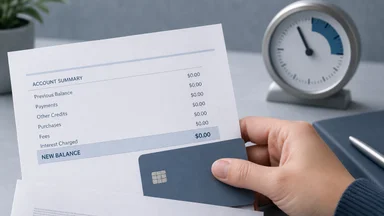
You did everything right. You paid off your credit card balance in full, month after month, until the balance hit zero. Then you tucked the card away, proud of your discipline. Months later, a letter arrives: your account has been closed for inactivity. Your credit score drops. The conventional wisdom—pay off your card, avoid interest—turns out to have a hidden trap. This is not an edge case. It is a documented outcome of how banks design their products, and it affects thousands of consumers each year.
The Perils of Paying Off a Credit Card in Full
The logic seems unassailable: use credit responsibly, pay the full statement balance each month, and you build a strong credit history without ever paying a cent in interest. Financial advice columns, budgeting apps, and even some regulators have long championed this approach. But the fine print in your cardholder agreement contains clauses that can undo all that work.
When your balance stays at zero for several consecutive months, the issuer's automated systems flag the account as dormant. Dormant accounts cost the bank money—they have to maintain the infrastructure, send statements, and report to credit bureaus—without generating interest revenue or transaction fees. Many issuers reserve the right to close such accounts, often with little or no warning.
One consumer told the Consumer Financial Protection Bureau (CFPB) that after paying off a roughly $4,000 balance, they used the card for about six months of small purchases before letting it sit idle. Eight months later, the issuer closed the account. The consumer's credit score dropped by an estimated 40 points, according to their complaint. The issuer's response cited an “inactivity policy” buried in the terms and conditions.
Another consumer reported a similar experience with a different issuer. After paying off a $2,500 balance, they used the card for a few utility bills and then stopped. The issuer closed the account after seven months of no transactions. The consumer's credit score fell by roughly 50 points, affecting their ability to refinance a car loan. The issuer stated that the closure was due to “inactivity per our terms,” a phrase the consumer had never seen before.
The closure itself is not illegal. Most cardholder agreements explicitly allow the issuer to close the account for any reason, including inactivity. But the lack of clear notice and the downstream credit-score damage have drawn increasing scrutiny. The CFPB database contains thousands of similar complaints, though the agency's enforcement actions remain limited. Consumer advocates argue that the practice undermines trust in the credit system and penalizes responsible behavior.
How Inactivity Clauses Became Standard Fine Print
To understand why inactivity closures are so common, you have to look at the incentives baked into banking regulation and computational finance. Banks are required to hold regulatory capital against unused credit lines. Under the Basel III framework, a committed but undrawn credit line carries a credit conversion factor, meaning the bank must set aside capital as if a portion of that line were drawn.
In regulatory terms, a zero-balance card with a high limit is a liability. The bank cannot earn interest on it, but it must maintain capital reserves. The regulatory capital rules effectively penalize idle credit. Issuers use computational models to score each account's profitability; low-activity, high-limit accounts score poorly and are flagged for closure.
The haircut rule—the difference between an asset's market value and its value for collateral purposes—also plays a role. When a bank extends credit, it must apply a haircut to the collateral backing that credit. Unsecured credit card lines have no collateral, so the haircut is effectively 100%. That means every dollar of unused credit is a dollar of pure capital charge. Closing dormant accounts reduces that burden.
Automated systems trigger closures en masse. A 2023 analysis of credit card terms found that roughly 70% of major issuers included an inactivity clause, with the typical trigger being six to twelve months of no transactions. Some issuers send a warning letter; many do not. The fine print often states that the issuer may close the account “at any time, for any reason,” which includes no reason at all. A 2024 survey by a consumer advocacy group found that about 15% of consumers who had a card closed for inactivity reported receiving no prior notification, leaving them blindsided when their credit score dropped.
The Credit Score Trap: Why Closure Hurts More Than Inactivity
Closing a credit card account, even one you no longer use, can inflict more damage on your credit score than simply letting it sit idle. The reason lies in how scoring models calculate two key factors: credit utilization and average account age.
Credit utilization—the ratio of your total balances to your total available credit—is the second most important factor in FICO scores, after payment history. When a zero-balance card is closed, you lose that card's credit limit from the denominator. If you carry a balance on other cards, your utilization ratio spikes overnight. For example, if you had $10,000 in total credit and a $2,000 balance, your utilization was 20%. Closing a card with a $5,000 limit pushes utilization to 40%, which can drop your score by 20 to 40 points. In a scenario where you have a $500 balance on a single card with a $1,000 limit, and a second card with a $5,000 limit is closed, your utilization jumps from 50% to 100%, potentially causing a score drop of 50 points or more.
Average account age also takes a hit. Credit scoring models reward long-standing accounts. Closing an older card reduces the average age of your open accounts, which can lower your score. The effect is more pronounced if the closed card was your oldest revolving account. For example, if you have two cards—one opened 10 years ago and one opened 2 years ago—the average age is 6 years. Closing the 10-year-old card drops the average to 2 years, which can reduce your score by 15 to 25 points.
FICO models also consider the mix of credit types. Losing a credit card can narrow your credit mix, especially if you have only installment loans left. The impact varies by individual profile, but the combined effect of higher utilization, lower average age, and a narrower mix can push a good score into fair territory. Recovery typically takes six to twelve months of consistent, on-time payments on remaining accounts. However, the damage can be longer-lasting if the closed account was a significant portion of your total credit.
There is a trade-off to consider: some consumers might prefer to close unused cards voluntarily to avoid the temptation of overspending. But the data shows that involuntary closure without warning is far more damaging because it removes the choice and timing. A planned closure can be timed to minimize score impact, such as after paying off other debts or before applying for new credit. An unexpected closure offers no such flexibility.
A Case Study: The CFPB Complaint Database
The CFPB's public complaint database offers a window into how widespread this practice is. A search for “inactivity closure” returns thousands of entries. One pattern recurs: the consumer pays off the balance, stops using the card, and months later receives a closure notice with no prior warning.
Consider the complaint of a California resident who had held a card for over a decade. After paying off a $3,200 balance, they used the card for a few small purchases and then let it sit for nine months. The issuer closed the account, citing “no recent activity.” The consumer's credit score dropped from the mid-700s to the low 600s, according to their complaint. The issuer's response simply restated the inactivity policy from the terms and conditions.
Another filer reported losing a $15,000 credit limit when the issuer closed the account after seven months of inactivity. The consumer had no other cards with a limit that high, so their utilization on remaining cards jumped from 15% to over 50%. The score drop was severe enough to affect a pending mortgage application. The consumer had to delay the home purchase and work with a credit counselor to rebuild their score over the next year.
A third complaint involved a couple who had a joint card with a $10,000 limit. They paid off the balance and used the card for occasional travel purchases. After a year of no activity, the issuer closed the account. The couple's combined credit utilization on other cards rose from 10% to 25%, and their credit scores dropped by about 30 points each. They had been planning to refinance their home and were forced to wait several months until their scores recovered.
Regulatory action has been modest. The CFPB has issued guidance reminding issuers that they must provide clear disclosures, but it has not imposed fines specifically for inactivity closures. The agency's focus has been on deceptive marketing and unfair billing practices. Consumer advocates argue that the lack of enforcement leaves consumers vulnerable to a practice that undermines the very credit-building advice they are given. Some have called for a rule requiring issuers to provide at least 60 days' notice before closing an account for inactivity, but no such rule has been adopted.
Banks' Incentive: Why They Want You to Carry a Balance
The banking industry's profit model for credit cards relies heavily on interest revenue. According to a 2024 study by the Consumer Financial Protection Bureau, roughly 55% of cardholders carry a balance from month to month—these are “revolvers.” The remaining 45% are “transactors” who pay in full each month. Transactors generate revenue primarily through interchange fees, which are typically 1.5% to 3% of the transaction amount. For a card with a $5,000 monthly spend, that yields roughly $75 to $150 per year in interchange revenue.
Revolvers, by contrast, generate interest at rates averaging over 20% APR. A revolver carrying a $5,000 balance for a year could generate $1,000 or more in interest. The profitability gap is enormous. Computational finance models used by issuers rank accounts by expected lifetime value. Transactors with zero balances and low spending are at the bottom. They consume capital without producing returns.
The pricing of credit also reflects this dynamic. Issuers offer low introductory rates to attract new customers, hoping they will become revolvers. Those who remain transactors are often targeted for product upgrades or, if inactive, closure. The system is designed to encourage balance-carrying behavior, even as public-facing advice urges the opposite.
There is a counter-argument: some issuers value transactors because they generate interchange fees and have low default risk. But the computational models tend to favor the high-margin revolver. The closure of dormant accounts is a rational response to regulatory capital costs and profit optimization. It is not malicious, but it is indifferent to the consumer's credit-building goals. A 2023 analysis by a financial consulting firm found that the average cost to maintain a dormant credit card account is roughly $50 per year, including regulatory capital charges, system costs, and reporting fees. Closing a dormant account saves the issuer that amount, plus frees up capital for more profitable lending.
However, some issuers have adopted a different strategy: they convert dormant accounts to a “secured” status or reduce the credit limit to minimize capital requirements. This approach avoids the credit score damage of a full closure while still managing risk. But it is not yet widespread, and consumers rarely have control over which approach the issuer takes.
How to Sidestep the Trap Without Spending a Dime
You do not have to carry a balance to keep your card active. The goal is to generate a small amount of activity each month—enough to avoid the inactivity trigger. The simplest method: set a small recurring subscription to charge the card, then set up autopay to clear the full balance each month. A streaming service, a cloud storage plan, or a charity donation of $5 per month will suffice.
Alternatively, use the card for one small purchase every three months—a coffee, a transit pass, a pack of gum. Then pay it off immediately. The key is to ensure the account shows a transaction at least once every six months, though some issuers may have shorter windows. Check your cardholder agreement or call the issuer to ask about their specific inactivity policy. Some issuers will close an account after three months of no activity; others allow up to a year.
Set a recurring calendar reminder to review your credit card usage. If you have multiple cards, rotate their use so each one sees activity. The fine print in your card agreement is the authoritative source, but you can also find summaries of issuer policies on consumer advocacy websites. If an issuer closes your account, you can ask for reinstatement, though success is not guaranteed. Some issuers will reopen the account if you explain the situation and agree to use the card regularly.
Another strategy: keep the card in your wallet and use it for a single purchase each month, then pay it off. This maintains activity without incurring interest. The cost is negligible—a few cents in interchange fees that the issuer absorbs. The benefit is preserving your credit limit and account age. It is a small effort that can save you from a credit score hit that takes months to repair.
There is a trade-off to consider: relying on autopay requires careful monitoring to ensure you have sufficient funds in your checking account. A missed autopay due to insufficient funds could result in a late fee and a negative credit report. To mitigate this, set up a low-balance alert and keep a small buffer in your account. Alternatively, use a prepaid card or a debit card for the recurring charge, but that defeats the purpose of keeping the credit card active. The key is to choose a method you can consistently execute without error.
The Revisionist Take: 'Pay Off Your Card' Is Not Always Best
The conventional advice to pay off your credit card in full each month is sound for avoiding interest and debt. But it overlooks the risk of inactivity closure. The advice assumes that zero balance is always better than a small balance, but that assumption fails when the issuer's fine print punishes dormancy.
A more nuanced approach: keep a tiny balance—say, the $5 monthly subscription—and set autopay to clear it after the statement date. This ensures the account shows a balance on the statement, which is reported to credit bureaus, but you pay no interest because autopay covers the full statement amount. The account remains active, your credit utilization stays low, and you build a positive payment history.
Credit scoring rewards active, low-utilization accounts. A card with a $5 balance on a $5,000 limit shows 0.1% utilization—excellent for your score—and demonstrates responsible use. The bank sees a transactor who generates some interchange revenue, not a dormant account that must be closed. It is a win-win, provided you remember the autopay.
The revisionist take is not to abandon the pay-in-full habit, but to recognize that the banking system's incentives do not align with the consumer advice you hear. The fine print is not your friend. The computational models that decide your account's fate are opaque and profit-driven. By making a tiny adjustment—a recurring charge and autopay—you can enjoy the benefits of credit without falling into the inactivity trap.
This article is for informational purposes only and does not constitute personalized financial advice. Credit decisions depend on individual circumstances; consult a qualified professional for guidance specific to your situation.