Escrow Agents Hold Your Refinance Savings for Forty-Five Days Before Releasing Them
You refinanced your mortgage to capture a lower rate, and the math looked good: lower payment, thousands saved over the loan term. Then came the wait. Thirty, forty, sometimes forty-five days after closing, your old lender still hasn't been paid off, and your new loan's funds are sitting in an escrow account. The delay is baked into the process, rarely negotiated, and almost never disclosed in a way that makes its cost obvious. This article traces the money, the rules, and the leverage you might not know you have.
The Forty-Five-Day Gap That Costs You Thousands
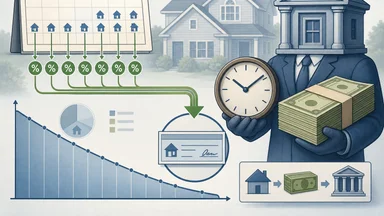
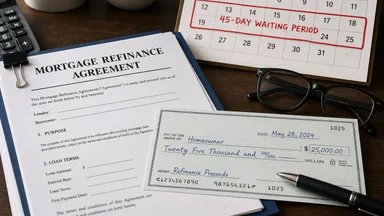
When you close a refinance, the new lender wires funds to an escrow agent—typically a title company or settlement agent. That agent holds the money until it disburses to your old lender to pay off the existing mortgage. The hold period commonly runs 30 to 45 days, sometimes longer, depending on the contract and the state.
During that gap, you are paying interest on the new loan while the old loan remains unpaid. The old lender continues to accrue interest on the balance you thought was cleared. The net effect: you lose the benefit of the lower rate for an extra month or more. On a $300,000 loan at a 6 percent rate, that is roughly $1,500 in interest that could have been saved. For a $500,000 loan at the same rate, the loss jumps to about $2,500. Even at a lower rate of 4 percent, a $300,000 loan costs around $1,000 in lost interest over a 45-day hold. The exact amount depends on your loan size, rate, and the hold duration, but the pattern is consistent: the longer the hold, the more you lose.
The escrow agent typically places the funds in a non-interest-bearing trust account. The agent earns nothing directly from the hold, but the lenders involved—the old and new—benefit from the float. The new lender has your payment stream starting, while the old lender keeps collecting interest on a loan that has already been refinanced. The aggregate value of this float across the U.S. mortgage market runs into the billions annually, according to Federal Reserve data on custodial balances.
State laws rarely mandate a faster release. Most states set a general standard for “reasonable” disbursement, but few define a specific number of days. California, for example, limits the hold to 30 days after recording, but that is an exception. In most states, the contract governs, and the contract is written by the lender.
Who Writes the Escrow Timeline Into Your Contract
The escrow timeline is not a random artifact; it is built into the closing documents drafted by the title company and the lender. The Consumer Financial Protection Bureau’s TILA-RESPA Integrated Disclosure rules require lenders to disclose the estimated closing costs and cash-to-close, but they do not set a maximum for how long the escrow agent can hold funds before disbursing.
Lenders dictate the hold terms indirectly through their instructions to the escrow agent. The agent waits for the lender’s funding confirmation, then for the payoff statement from the old lender, then for recording of the new deed of trust, and then for clearance of any checks. Each step adds days. The CFPB has received thousands of complaints about delayed escrow disbursements, but the bureau has not proposed a rule to cap the hold period.
State insurance departments regulate title companies and escrow agents in many states. But their focus is on solvency and fraud prevention, not on speed of disbursement. A 2023 survey by the American Land Title Association found that the average time from closing to disbursement was 38 days, with delays most common in states that require paper recording. In states like New York, where paper recording is still the norm, average hold times can exceed 45 days. In contrast, states with widespread e-recording, such as Arizona, often see holds under 30 days.
The result is a system where the borrower has little say. The closing documents are long, the fine print dense, and the escrow timeline is buried in a paragraph that few read. Even if you spot it, the lender typically treats it as non-negotiable. But as we will see, there are ways to push back.
How Lenders Profit from the Float
The float is the interest earned on money that is in transit. When an escrow agent holds funds from thousands of refinancings, the aggregate balance can be enormous. Lenders do not directly earn interest on those funds—the escrow agent does, but the agent often remits that interest back to the lender as part of the servicing agreement.
In 2025, the Federal Reserve reported that depository institutions held roughly $30 billion in custodial escrow balances for mortgage servicing. A portion of that is from refinance transactions in the pipeline. Even at a short-term interest rate of 5 percent, the annual float income on that pool would be $1.5 billion. That figure is an estimate, but it illustrates the scale. For a single large lender like Wells Fargo or JPMorgan Chase, the float from refinance escrows alone can add tens of millions of dollars to annual revenue.
The practice is similar to how mortgage servicers hold property tax and insurance escrows. Servicers earn interest on those prepaid funds, and they are not required to share it with borrowers. The same logic applies to refinance escrows. The lender has use of the money for the hold period, and the borrower gets nothing.
Some consumer advocates argue that this float is a hidden cost of refinancing. The borrower pays interest on the new loan from day one, but the old loan is not paid off for weeks. The double-interest period can wipe out a significant portion of the savings that the refinance was supposed to deliver. For example, if you refinance a $250,000 loan from 7 percent to 5.5 percent, your monthly payment drops by about $250. But if the hold period costs you $1,200 in extra interest, it takes nearly five months of lower payments just to break even. The delay effectively pushes your savings horizon further out.
Not everyone agrees that the float is a problem. Lenders argue that the hold period is necessary to ensure proper recording and avoid fraud. They point out that without the delay, errors could lead to costly legal disputes. But critics counter that the current system is slower than it needs to be and that lenders have little incentive to speed it up because they profit from the float.
The Mechanics of a Typical Refinance Escrow Release
Understanding the steps helps explain why the hold takes so long. On closing day, the new lender wires the loan funds to the escrow agent. The agent then requests a payoff statement from the old lender. The old lender has up to three business days to provide it, though many do so within 24 hours.
Next, the agent must record the new deed of trust with the county clerk. Recording times vary wildly. Some counties accept electronic recordings and process them the same day. Others require paper documents and take a week or more. In rural counties with understaffed offices, recording can take two weeks. For example, in parts of rural Montana, recording can take 10 to 14 business days, while in Maricopa County, Arizona, e-recording is often completed within 24 hours.
After recording, the escrow agent waits for the payoff check to clear. If the agent uses a wire transfer, the funds move faster. But many agents still issue paper checks, which take several days to clear. The old lender then must apply the payment to your account, which can take another few days.
Finally, the borrower has a three-business-day right of rescission under federal law for most refinances. This right begins after closing, and the lender cannot disburse funds until that period expires. If you close on a Friday, the rescission period ends the following Wednesday, adding at least three days to the timeline. Some borrowers mistakenly think the rescission period is the main cause of the delay, but in practice, recording and check clearance often add more time.
There is also a lesser-known step: the escrow agent may wait for the new lender to confirm that the loan has been funded. This confirmation can take a day or two, especially if the wire is sent late in the day. Each step is a separate link in the chain, and the total time is the sum of all the delays.
Why Borrowers Almost Never Fight the Delay
Given the cost, you might expect borrowers to push back. But the CFPB's complaint database shows relatively few disputes specifically about escrow hold times. In 2025, the bureau received about 1,200 complaints categorized as “escrow account issues” out of over 1 million total mortgage complaints. That is roughly 0.1 percent.
The reasons are straightforward. Most borrowers are not aware that the hold is costing them money. The closing documents disclose the interest rate and monthly payment, but not the lost interest during the hold period. The fine print on the escrow timeline is easy to miss.
Second, for most borrowers, the refinance still saves money even with the delay. The net present value of the lower rate over the life of the loan usually outweighs the one-time cost of the hold. The borrower is better off than not refinancing, so they accept the delay as a minor annoyance. For instance, if you save $200 per month and the hold costs you $1,000, you still come out ahead after five months. Over a 30-year loan, the savings dwarf the hold cost.
Third, there is no penalty clause for slow disbursement in standard contracts. Borrowers cannot demand a per-diem credit unless they negotiate one upfront. And lenders rarely offer it. The asymmetry of information and leverage means the borrower simply waits. Some borrowers have tried to file complaints with the CFPB, but the bureau typically forwards the complaint to the lender and closes the case without imposing penalties. The system is designed to absorb individual grievances without changing the underlying incentives.
States That Have Tried to Speed Up the Clock
A few states have attempted to regulate the hold period. California requires that escrow agents release funds within 30 days after recording the deed, unless the parties agree otherwise. Texas has a more aggressive rule: funds must be disbursed within 15 days of recording. Lenders and title companies in Texas have adapted by using electronic recording and wire transfers to meet that deadline. As a result, Texas borrowers often see holds of 20 to 25 days, significantly shorter than the national average.
New York considered a bill in 2024 that would have capped the hold at 21 days, but it stalled after opposition from the title insurance industry. Lobbyists argued that a rigid deadline would increase errors and fraud risk. The bill never made it to a vote. Similar proposals in Illinois and Florida have also failed to gain traction, largely due to industry pushback.
No uniform national standard exists. The CFPB has the authority to issue a rule under the Real Estate Settlement Procedures Act, but it has not done so. The bureau's focus in recent years has been on closing cost transparency and foreclosure prevention, not post-closing disbursement speed. Some consumer groups have petitioned the CFPB to address the issue, but so far without success.
The patchwork of state laws means that where you live determines how long you wait. Borrowers in Texas and California have some protection. Borrowers in states with no specific rule—the majority—are at the mercy of the contract. However, even in states without laws, some counties have adopted local practices that speed up recording. For example, in King County, Washington (Seattle area), e-recording is standard, and holds are often under 30 days. In contrast, borrowers in rural counties in the Midwest may face holds of 45 to 60 days.
What You Can Do to Shorten the Wait
You have more leverage than you think, but you have to use it before you sign. The first step is to ask your lender to include an expedited release clause in the closing instructions. Some lenders will agree to disburse funds within 10 business days of closing if you request it in writing. This is more likely if you have a strong credit score and a low loan-to-value ratio. Lenders want to keep you happy, especially if you are a repeat customer.
Second, choose a local escrow firm with a reputation for fast processing. National title companies may have standardized procedures that add days. A local agent who knows the county recording office can often get documents recorded in 24 hours instead of a week. Ask your real estate agent or broker for recommendations. Some title companies advertise their average disbursement times; use that information to compare.
Third, ask about electronic recording. Many counties now accept e-recording, which cuts days off the timeline. If your county offers it, the escrow agent can record the deed the same day the payoff statement arrives. Confirm with your escrow agent that they use e-recording. If they do not, consider switching to a firm that does.
Fourth, consider waiving the right of rescission if the law allows it. For purchase-money mortgages, there is no rescission right. For refinances, federal law gives you three business days, but you can waive it only in a bona fide personal financial emergency. The waiver is rare and requires a written statement, but it can shave three days off the clock. An emergency might include an imminent foreclosure or a job relocation that requires immediate funds. Most borrowers do not qualify, but it is worth asking your lender if you have a compelling reason.
Finally, negotiate a per-diem interest credit. Ask the lender to credit you for each day the escrow holds funds beyond a specified date. Even a few basis points can offset the cost. Most lenders will not agree, but it is a reasonable request if you have a strong credit profile and the loan is competitive. For example, you might propose that the lender credit you 1/365th of the annual interest on the loan amount for each day beyond 30 days. On a $300,000 loan at 6 percent, that is about $49 per day. Over 15 extra days, that is $735—real money.
Another option is to refinance with a lender that offers a faster escrow process. Some online lenders and credit unions have streamlined their operations and can disburse funds in 20 to 25 days. Shop around and ask about average disbursement times before you commit. A lender that promises a faster release may be worth a slightly higher rate.
In the end, the forty-five-day gap is a feature of the system, not a bug. It benefits lenders and is tolerated by borrowers because the alternative—no refinancing—is worse. But understanding the mechanics puts you in a position to ask for better terms. The next time you refinance, read the escrow clause. Ask how long the hold will be. And if it is longer than 30 days, ask why. With a little effort, you might be able to cut the wait in half.
This article is for informational purposes only and does not constitute legal or financial advice. Consult a qualified attorney or tax professional for guidance on your specific situation.