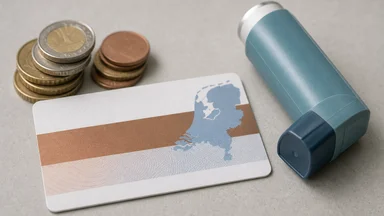
A Dutch Health Premium Pool Funded One Hospital Stay Through Three Insurer Risk Pools
In the Netherlands, a single hospital stay is funded through three separate risk pools: the individual base premium covers routine care, the collective surcharge spreads group risk, and a reinsurance layer backs extreme losses. Together, they form a system that is both robust and opaque. According to a 2023 study by the Dutch Healthcare Authority (NZa), administrative overhead consumes roughly 10–15% of every premium euro before a claim is paid. The patient sees none of this—just a bill settled by the insurer. But the architecture behind that settlement shapes premiums, competition, and access in ways that matter for every policyholder.
One Patient, Three Pools: How Risk Slices Multiply Premiums
Consider a Dutch resident who undergoes a hospital stay costing €10,000. That sum is not drawn from a single reserve. Instead, it is split across three risk pools: the individual base premium pool, the collective group pool, and a reinsurance catastrophe layer. Each pool takes a cut before the provider is paid, and each carries its own administrative cost. The individual pool, which covers the first €385 of mandatory deductible and routine claims, absorbs roughly 70% of the premium. The collective pool, which spreads claims across members of a group contract, handles another 15–20%. The reinsurance pool, triggered only when an insurer’s annual losses exceed roughly €25–30 million, covers the tail. The result is a system where the same claim passes through multiple hands, each adding a layer of overhead.
This layered structure is not unique to the Netherlands—many European health systems use risk equalization—but the Dutch model is distinctive for its reliance on private carriers competing within a national mandate. The premium pool is funded by monthly contributions of around €120–150 per adult, plus a mandatory deductible of €385 per year. Voluntary deductibles can lower the monthly cost, but they shift more risk to the policyholder. The net effect is that a patient’s bill is ultimately paid by a complex web of transfers, not a single fund.
For the patient, the split is invisible. The hospital sends the bill to the insurer, which pays from its own reserves, then recoups the cost through the risk equalization fund and reinsurance recoveries. The patient’s only direct interaction is the deductible. But the structure affects what plans cost, which providers are in network, and how quickly claims are paid. Understanding the three pools is the first step to understanding why premiums vary so much across plans.
The Dutch Model: A National Mandate with Private Carriers
The Netherlands requires all residents to buy basic health insurance from private carriers. The government sets a standard benefit package that covers GP visits, hospital stays, prescription drugs, maternity care, and mental health services. Insurers compete on price and network, but they cannot deny coverage or set premiums based on health status. To prevent cherry-picking, a risk equalization fund redistributes premiums from insurers with healthier enrollees to those with sicker ones. The system is overseen by the Dutch Healthcare Authority (NZa).
Around 4.5 million people are in collective contracts, which are group plans offered by employers, associations, or other organizations. The rest buy individual plans directly. The market is dominated by four groups: Achmea, VGZ, CZ, and Menzis, which together cover roughly 85% of the population. This concentration has raised concerns about competition, but new entrants have struggled to gain scale. The government’s role is to set the rules and ensure solvency, while carriers manage risk and negotiate with providers.
The risk equalization fund is the system’s linchpin. It uses a formula that accounts for age, gender, region, and prior health costs to calculate each insurer’s expected claims. Carriers with a healthier-than-average pool pay into the fund; those with sicker members receive payments. This mechanism reduces the incentive to avoid high-risk patients and keeps premiums from diverging too widely. In 2026, the fund redistributes roughly €20 billion annually. Without it, individual premiums could vary by a factor of two or more.
Collective contracts add another layer of risk pooling. Employers negotiate discounts of 5–10% off the base premium in exchange for enrolling a large group. The group’s claims are pooled separately, so if the group is healthier than average, members may see lower premiums or rebates. Some large employers self-insure part of the risk through captive arrangements, further reducing costs. But collective plans often have narrower networks, limiting choice for members who want a specific specialist or hospital.
Risk Pool One: The Individual Base Premium
The individual base premium is the foundation of the Dutch system. Every adult pays a monthly premium of roughly €130–150 in 2026, plus a mandatory deductible of €385 per year. This pool covers GP visits, hospital stays, prescription drugs, maternity care, and other medically necessary services with no lifetime or annual limits. The deductible applies to most services except GP visits, preventive care, and some chronic disease management. Policyholders can increase their deductible voluntarily by up to €500 in exchange for a lower monthly premium, a trade-off that appeals to those who expect few claims.
Insurers set their own base premiums, but competition keeps them within a narrow band. In 2025, the difference between the cheapest and most expensive individual plan was roughly €20 per month. This narrow spread reflects the risk equalization fund’s dampening effect—carriers cannot underprice based on favorable selection because the fund adjusts for risk. Instead, they compete on network breadth, service quality, and supplementary coverage for dental, physiotherapy, or alternative medicine.
The individual pool is the most expensive to administer. Each policy requires underwriting (though health status is not used), billing, and claims processing for a single member. Administrative costs run 12–15% of premium, compared to 5–7% for group plans. Some of this overhead is fixed: the cost of a claims system is similar whether it handles 1,000 or 1 million members. Smaller insurers face higher per-member costs, which is one reason the market has consolidated.
For the policyholder, the individual premium is the most visible cost. But its relationship to the total cost of care is indirect. The premium covers only the insurer’s expected claims for a typical member, plus overhead and profit. The risk equalization fund and reinsurance absorb the volatility. This means that a healthy young person paying €1,500 a year is subsidizing older, sicker members—a deliberate feature of the system.
Risk Pool Two: The Collective (Group) Surcharge
Collective contracts offer a discount on the base premium, typically 5–10%, but they also create a separate risk pool. The group’s claims are aggregated, and the insurer prices the contract based on the expected health costs of that specific group. If the group is healthier than average, the discount can be larger; if sicker, the discount may shrink or the contract may be declined. This pooling within a pool means that members of a collective plan are not subsidizing the general population as much—their premiums reflect their own group’s risk.
Employers often offer collective plans as a benefit, deducting premiums from payroll. Associations—such as professional organizations, alumni groups, or sports clubs—also negotiate group contracts. The administrative cost of group plans is lower because the insurer deals with a single point of contact and can use aggregated data for pricing. Some large employers self-insure part of the risk, setting up a captive that assumes claims up to a certain threshold, with the insurer providing stop-loss coverage above that.
The collective pool introduces a trade-off between cost and choice. Group plans typically have narrower networks, limiting members to a specific set of hospitals and specialists. This allows the insurer to negotiate lower prices with providers, which is part of how the discount is funded. Members who want to see a specialist outside the network may have to pay extra or choose a different plan. For healthy individuals who rarely need care, the lower premium often outweighs the network restriction.
Collective contracts also affect the risk equalization fund. Because the fund redistributes based on individual characteristics, not group membership, a group with lower-than-average claims may still receive payments from the fund if its members are older or sicker on paper. This can create a double benefit for insurers that attract healthy groups: they keep the premium discount and also receive risk equalization payments. Critics say this undermines the fund’s purpose; defenders argue it reflects legitimate differences in group risk.
Risk Pool Three: Reinsurance and Catastrophe Backstops
The third pool is the reinsurance layer, which covers extreme losses that would otherwise destabilize an insurer. In the Netherlands, insurers cede part of their risk to the Nederlandse Herverzekeringsmaatschappij (NHM), a national reinsurer that backstops catastrophic claims. The NHM covers annual losses above roughly €25–30 million per carrier, a threshold that varies by size. This pool is funded by premiums paid by insurers, which are ultimately passed on to policyholders as a small component of the monthly premium.
Reinsurance is essential for managing volatility. A single major accident, a pandemic, or a cluster of expensive treatments could otherwise wipe out an insurer’s reserves. The NHM’s role is similar to that of a state-backed catastrophe pool in other countries, but it is funded entirely by the industry. In 2026, the NHM holds roughly €2 billion in reserves, enough to cover a severe event. For context, Allstate’s pre-tax catastrophe losses for Q2 2026 reached $1.72 billion (as reported by Artemis.bm), a reminder of how quickly losses can mount.
The reinsurance pool also interacts with risk equalization. The equalization fund smooths out predictable differences in health costs, but it does not cover extreme events. Reinsurance fills that gap. Without it, insurers would need to hold larger reserves, driving up premiums. The Dutch system’s reliance on a national reinsurer rather than private markets is a deliberate choice to keep costs lower and ensure availability. However, it also concentrates risk: if the NHM were to face a series of large claims, it might need to raise premiums or seek government support.
Beyond the NHM, some insurers buy additional reinsurance from private carriers, especially for outlier risks like gene therapies or new cancer drugs. These treatments can cost hundreds of thousands of euros per patient, and a few such claims can strain an insurer’s finances. The private reinsurance market for health risks is growing, with some experts calling for insurance-linked securities (ILS) to fund long-tail risks such as pollution liability or climate-related health impacts. A Beazley study noted that ILS could mobilize capital for the energy transition (as reported by Artemis.bm), a trend that may eventually reshape health reinsurance as well.
Where the Premium Euro Actually Goes
Of every euro paid in health insurance premiums, roughly 70–75 cents goes to medical claims and provider payments. Another 10–15 cents covers administrative and sales costs, including underwriting, claims processing, marketing, and broker commissions. Profit and reserves account for 5–10 cents, though margins in Dutch health insurance are thin—typically 2–4% of premium. Reinsurance and risk equalization levies consume 5–10 cents, and the remainder covers taxes and mandatory contributions to the Health Insurance Fund.
The administrative slice is the most variable. Group plans, with their lower overhead, might allocate only 5–7 cents to administration, while individual plans spend 12–15 cents. This difference explains why collective contracts can offer discounts without sacrificing solvency. It also explains why insurers push group plans—they are more profitable per member. For the policyholder, choosing a group plan over an individual one can save €100–200 per year, but the trade-off is less choice in providers and less flexibility in coverage.
The profit margin is often a point of contention. Critics argue that health insurance should be non-profit, as in Canada or the UK. Defenders note that the Dutch system’s profit is capped by regulation and that competition keeps premiums low. In practice, most Dutch health insurers are mutuals or cooperatives, which return surplus to members or reinvest it. Stock companies like CZ are the exception. The profit margin is roughly 2–3% of premium, which translates to €30–45 per policyholder per year—a small amount compared to the total premium.
The reinsurance and risk equalization levies are the least visible but most important for stability. The risk equalization fund alone redistributes about €20 billion annually, roughly 15% of total premium. This transfer ensures that no insurer is stuck with a disproportionately sick pool. Without it, premiums would vary wildly, and some carriers would go bankrupt. The cost of this stability is borne by all policyholders, but it is spread so thinly that few notice.
What This Means for Policyholders and Regulators
For policyholders, the key insight is that price shopping only matters within your risk pool tier. If you are in a collective plan, comparing your premium to an individual plan is misleading—the two pools have different cost structures and risk profiles. Instead, compare plans within the same tier. Also, consider the trade-off between premium and deductible: a higher deductible lowers your monthly cost but increases your out-of-pocket risk if you get sick. For most people, the standard deductible is a reasonable balance.
Collective plans offer lower overhead but less choice. If you value access to a broad network of specialists, an individual plan may be worth the extra cost. If you are generally healthy and rarely need care, a collective plan with a narrow network can save you money. Some employers offer multiple collective plans with different networks, giving employees some choice. But the trend is toward narrower networks, as insurers seek to control costs.
For regulators, the challenge is balancing solvency against affordability. The risk equalization fund must be recalibrated regularly to reflect changing demographics and treatment costs. The NHM must maintain adequate reserves without overcharging insurers. And the government must ensure that insurers do not engage in risk selection despite the fund. Recent events, such as the expansion of data centers in tornado-prone areas (as reported by Carrier Management), highlight how external risks can affect health insurance pools indirectly through pollution or property damage. Similarly, PFAS cleanup costs may soon hit health pools via pollution liability (as reported by Insurance Journal), adding another layer of uncertainty.
The system works well for most people, but its complexity can obscure the true cost of care. Policyholders who understand the three pools can make better decisions about their coverage. Regulators who monitor the system can adjust it to maintain stability. Yet the question remains: does the overhead of multiple risk pools ultimately justify the benefits of competition and choice, or would a simpler single-payer model serve the population better? The answer may depend on whether one values customization over efficiency, and whether the administrative costs are seen as a necessary price for a market-based system or as a burden that could be streamlined.
This article is for informational purposes only and does not constitute professional insurance or financial advice. Readers should consult a qualified advisor for decisions specific to their situation.