A Lloyd’s Marine Syndicate Paid a Rotterdam Cargo Claim on a Single Bill of Lading Error
In marine insurance, a single typo can unravel a claim worth hundreds of thousands of dollars. A Rotterdam-bound cargo of electronics found that out the hard way when a Lloyd's syndicate rejected the entire claim because the bill of lading had a misstated container number. The dispute took over 14 months to resolve, and the eventual payout came at a steep discount—after legal fees ate into the settlement. This is not a story of fraud or gross negligence. It is a story about the absolute strictness of documentary compliance in marine policies written under English law, and what happens when that strictness meets a human error.
One Typo, One Rejection: The Rotterdam Claim That Hinged on a Single Bill of Lading Error
The shipment was routine: a container of consumer electronics from a manufacturer in East Asia, consigned to a Dutch distributor, routed through the Port of Rotterdam. The policy was a standard marine cargo open cover, placed through a Lloyd's broker and written by a specialist marine syndicate. The insured had been shipping similar cargo for years without incident.
When the container arrived, it was damaged—water ingress during the sea leg, likely from a storm. The insured filed a claim for roughly US$ 480,000, covering the cost of the damaged goods plus some incidental expenses. The surveyor's report confirmed the damage and attributed it to a peril of the sea. On the surface, it seemed like a straightforward claim under the Institute Cargo Clauses (A), which cover 'all risks' of physical loss or damage.
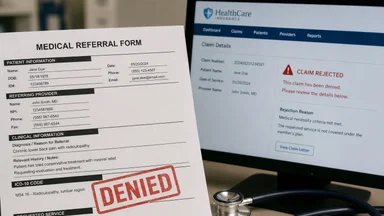
But the syndicate's claims handler noticed something in the documents. The bill of lading—the document of title that evidences the contract of carriage—listed the container number as 'MSCU 4821756.' The actual container on the vessel was 'MSCU 4821759.' A single digit off. The syndicate rejected the claim outright, citing a breach of the policy condition that required 'strict compliance' with all documentary requirements.
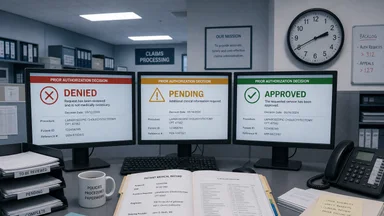
The insured argued that the error was immaterial—the container was identifiable by other details, such as the seal number and the consignee name. The syndicate did not budge. For 14 months, the claim sat in limbo while lawyers debated whether a typo could void a six-figure policy. The insured eventually accepted a 70% settlement, paid ex gratia—meaning the syndicate admitted no liability but offered a compromise to avoid litigation. By then, legal fees had already consumed roughly 15% of the original claim amount.
Why Marine Insurance Treats Paperwork as a Physical Risk
To an outsider, rejecting a claim over a single digit may seem absurd. But marine insurance operates on a principle that documentary accuracy is not a bureaucratic nicety—it is a core risk. The bill of lading is more than a shipping receipt; it is the document that transfers title to the goods. Banks rely on it for letters of credit. Customs authorities use it to verify cargo. Insurers use it to confirm that the insured has an insurable interest and that the cargo described matches what was shipped.
Under English law, which governs most Lloyd's policies, marine insurance contracts are contracts of the utmost good faith. Policy conditions are interpreted strictly. A clause requiring the insured to 'present the original bill of lading' is not a suggestion—it is a condition precedent to liability. If the document is wrong, the insurer may argue that the risk has been materially altered, even if the error had no bearing on the loss itself.
In this case, the syndicate argued that the misstated container number constituted a breach of warranty. The Marine Insurance Act 1906 defines a warranty as a condition that must be exactly complied with, whether material to the risk or not. If the warranty is breached, the insurer is discharged from liability from the date of the breach—even if the breach is later corrected. The fact that the container was correctly identified by other means did not matter. The warranty was broken.
Critics of this approach say it gives insurers a technical escape hatch. They argue that the purpose of insurance is to indemnify genuine losses, not to exploit clerical errors. But underwriters counter that documentary integrity is the foundation of marine risk assessment. If they cannot trust the documents, they cannot price the risk. A single error can mask fraud, misrepresentation, or even a completely different cargo. The strictness is a feature, not a bug.
The Lloyd’s Market Structure Behind the Decision
Lloyd's is not a single insurance company. It is a marketplace where dozens of syndicates—each with its own capital and underwriting appetite—compete for business. The Rotterdam cargo was written by a specialist marine syndicate, one of about 20 that focus on cargo, hull, and marine liability risks. Each syndicate operates independently, with its own claims philosophy and tolerance for negotiation.
When the claim was filed, it was handled by the syndicate's managing agent—the firm that runs the syndicate's day-to-day operations. The managing agent's claims team reviewed the documents, consulted the lead underwriter who wrote the risk, and made the decision to reject. There is no central Lloyd's authority that can overturn a syndicate's claims decision. The Corporation of Lloyd's sets the rules of the market, but it does not intervene in individual claim disputes.
This structure gives syndicates a great deal of autonomy, but it also creates inconsistency. A different syndicate might have waived the error, especially if the insured had a long relationship with the underwriter. Some syndicates include a 'non-compliance tolerance' clause in their policies, allowing for minor administrative errors that do not affect the risk. But in this case, the underwriter had the discretion to waive the error and chose not to. The broker had not negotiated such a clause into the policy.
The Lloyd's market has been moving toward greater transparency and standardisation in recent years, but the principle of syndicate independence remains sacrosanct. For the insured, that means the quality of your coverage depends as much on the syndicate you are placed with as on the policy wording itself. A claim that would be paid by one syndicate might be rejected by another, even on identical facts.
What the Policy Actually Said—and What It Didn't
The policy was based on the Institute Cargo Clauses (A), which provide 'all risks' cover subject to standard exclusions. But the syndicate had added a bespoke clause requiring the insured to 'present the original bill of lading, properly endorsed, and in the form required by the contract of carriage.' The clause did not explicitly address what constituted a 'proper' bill of lading, nor did it include a provision for minor errors.
The broker had not negotiated a tolerance provision—a clause that would allow the insurer to waive non-material documentary discrepancies. Such clauses are common in some markets, particularly for high-volume shippers who move thousands of containers a year. But for a mid-sized distributor, the broker may have considered it unnecessary, or the underwriter may have refused to include it without an additional premium.
The syndicate's argument rested on the 'all risks' wording itself. Under the Institute Cargo Clauses (A), the insured must prove that the loss was caused by a peril insured against, and that the policy conditions have been satisfied. The syndicate claimed that the documentary breach meant the policy conditions were not satisfied, so the 'all risks' cover did not attach to this particular shipment. The burden of proof shifted to the insured to show that the error was not material—a difficult argument to win under English law.
The policy also contained a 'held covered' clause, which typically allows the insured to notify the insurer of a change in circumstances and continue cover at a reasonable premium. But the syndicate argued that the error was not a change in circumstances—it was a pre-existing condition that the insured should have caught before shipment. The 'held covered' clause did not apply.
What the policy did not say was perhaps more important. It did not define 'materiality' or set a threshold for when an error could be ignored. It did not require the syndicate to act reasonably in considering the claim. And it did not give the insured any right to cure the error after discovery. These gaps are common in standard marine cargo wordings, and they are precisely the kind of details that a knowledgeable broker can address at the placement stage.
How the Claim Finally Got Paid—and What It Cost
After 14 months of back-and-forth, the syndicate agreed to a 70% settlement, paying roughly US$ 336,000 of the original claim. The payment was made ex gratia—a goodwill gesture, not an admission of liability. The syndicate's position was that the policy was void from the date of the breach, but they offered the settlement to avoid the cost and uncertainty of litigation.
By that point, the insured had already spent an estimated US$ 72,000 on legal fees and expert advice—roughly 15% of the original claim amount. The net recovery was about US$ 264,000, or 55% of the loss. The insured accepted the deduction because a full trial could have taken another two years and cost even more. The syndicate, for its part, avoided setting a legal precedent that might have weakened its documentary compliance stance in future claims.
The settlement did not establish a new rule. It was a commercial compromise, not a judicial ruling. The broker used the experience to revise the policy wording for the insured's next renewal, adding a tolerance clause that allowed for minor administrative errors not exceeding a de minimis threshold. The premium increased by roughly 5% to reflect the broader cover.
For the syndicate, the claim was a reminder that strict compliance can be a double-edged sword. It protects against fraud and misrepresentation, but it can also alienate good clients and generate bad publicity. Some syndicates have begun to adopt more flexible approaches, particularly for long-standing customers with clean claims histories. But the market as a whole remains conservative, and the default position is still that the document must be correct.
Three Takeaways for Anyone Shipping Cargo Through Lloyd’s
1. Never assume underwriters will correct an honest mistake. In many retail insurance lines, an insurer might give you a grace period to fix a minor error. In marine insurance at Lloyd's, the policy is the contract, and the contract is interpreted strictly. If the bill of lading has an error, the syndicate is within its rights to reject the claim. Do not rely on goodwill—rely on the wording.
2. Insist on a 'non-compliance tolerance' clause in the policy. A simple clause stating that the insurer will not reject a claim solely due to minor administrative errors that do not affect the risk can save months of dispute. Brokers can often negotiate this for an additional premium, or it may be included in a syndicate's standard wording if you ask. The cost of the clause is trivial compared to the cost of a rejected claim.
3. Have a dedicated document checker before shipment. The Rotterdam case turned on a single digit. A trained document checker—either in-house or at the freight forwarder—could have caught the error before the bill of lading was issued. The cost of a checker is small relative to the value of the cargo. For high-value consignments, consider using a specialist marine insurance broker who knows the documentary requirements of each syndicate.
The Human Cost of Documentary Strictness: A Counter-Argument
While the syndicate's position was legally defensible, it is worth examining the broader implications of such strictness. For the insured, the 14-month dispute was not just a financial setback—it disrupted cash flow, strained relationships with the Dutch distributor, and forced the company to set aside reserves for a loss that should have been covered. The legal fees alone were enough to absorb the profit margin on several subsequent shipments.
From a risk management perspective, the syndicate's decision may have been short-sighted. The insured had been a client for years, with a clean claims history and a professional approach to shipping. Rejecting the claim over a typo risked losing that business to a competitor—and indeed, the insured moved its coverage to a different syndicate at the next renewal, despite the revised wording. The original syndicate lost a reliable source of premium income for the sake of a principle that saved them only a portion of the claim value.
This is not an isolated case. In a similar situation involving a shipment of machinery from Germany to the United States, a Lloyd's syndicate rejected a claim because the bill of lading showed the wrong port of discharge—'Hamburg' instead of 'Bremerhaven.' The error was discovered after the goods were damaged in transit, and the syndicate refused to pay. The insured eventually settled for 60% of the loss, after incurring legal costs that exceeded the discount. The lesson is the same: documentary strictness can impose costs on both sides, and the market is slowly recognising that flexibility may be more efficient in the long run.
Some syndicates have begun to experiment with 'claims handling protocols' that require the claims team to consider the materiality of an error before rejecting a claim. These protocols are not yet widespread, but they reflect a growing awareness that the strict legal position does not always serve the commercial interests of the market. For shippers, the best defence remains prevention: get the documents right, and if you cannot, negotiate a tolerance clause that gives you breathing room.
The Role of the Broker: Why Expertise Matters
In the Rotterdam case, the broker played a central role—both in the initial placement and in the eventual settlement. The broker who placed the policy had not negotiated a tolerance clause, either because it was overlooked or because the underwriter was unwilling to include it. After the claim, the broker worked with the insured to revise the wording, but by then the damage was done.
Experienced marine brokers know which syndicates are more flexible on documentary issues and which ones enforce strict compliance. They also know how to word tolerance clauses to avoid ambiguity. A well-drafted clause might say: 'The insurer shall not reject a claim solely due to minor administrative errors in the bill of lading, provided that the error does not affect the identification of the cargo or the risk.' This kind of language gives the underwriter discretion while protecting the insured from technical rejections.
For shippers, the choice of broker is as important as the choice of syndicate. A broker who understands the nuances of documentary compliance can save you from the kind of nightmare that befell the Rotterdam cargo owner. The broker's fee is a small price to pay for that protection.
For shippers who move goods through multiple jurisdictions, the documentary requirements can vary widely. A bill of lading that is acceptable for a Chinese port may not satisfy a Lloyd's syndicate. Standardisation efforts, such as the electronic bill of lading under the UN/CEFACT framework, may reduce errors in the future, but adoption is slow. Until then, the burden remains on the insured to get the paperwork right.
This article is for informational purposes only and does not constitute legal or insurance advice. Policyholders should consult their broker or legal counsel for guidance specific to their situation.