A Texas Rideshare Driver’s Collision Claim Traveled Through Three Carrier Tiers Before One Adjuster
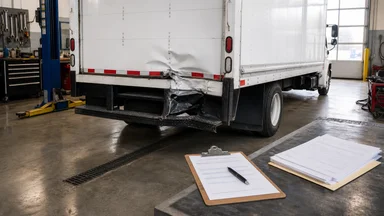
On a humid afternoon in March 2023, a rideshare driver lost control on US-75 near Plano, Texas, striking a concrete median at roughly 45 miles per hour. The driver sustained a fractured wrist; the passenger, a minor, suffered a concussion. No one died, but the financial chain the collision set in motion would travel through three carrier tiers, a third-party administrator, a reinsurance pool, and an insurance-linked securities fund before a single adjuster could authorize a settlement. This is the story of that claim — and what it reveals about how auto insurance actually works after a loss.
One Collision, Three Layers of Coverage
The driver carried a personal auto policy with 30/60/25 limits — Texas's minimum — issued by a regional carrier. He also had a rideshare endorsement, as required by the platform, and the platform itself maintained a commercial auto policy with a $1 million per-occurrence limit. When the driver hit the median, the first question was: which policy responds?
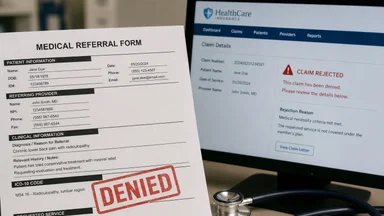
Personal auto policies uniformly exclude livery use — driving for hire — under standard ISO forms. Because the driver had accepted a ride request and the passenger was in the vehicle, the personal carrier denied the claim within 10 business days. That denial triggered the rideshare endorsement, which covers Period 1 — the time between accepting a ride and passenger pickup — but not Period 2, when the passenger is aboard. For Period 2, the platform's commercial policy is primary.
The commercial carrier assumed the claim. Its adjuster estimated total damages — medical, vehicle repair, legal — at roughly $80,000, well within the $1 million self-insured retention. But the passenger's attorney argued future medical costs for the concussion could exceed $200,000, threatening to break through the retention. The carrier notified its excess insurer, which attaches at $1 million.
By month four, the claim sat at the intersection of three policies: the denied personal layer, the active commercial primary, and a watchful excess carrier. Each layer had its own adjuster, its own documentation demands, and its own timeline.
How a Single Loss Moves Through a Reinsurance Tower
The commercial carrier retained the first $500,000 of each claim, but it had ceded 30% of that risk to a quota-share reinsurance pool. That pool included two European reinsurers and a Bermuda-based specialty writer. For every dollar the carrier paid, it recovered 30 cents from the pool — minus a ceding commission.
Above the $500,000 retention, an excess-of-loss treaty covered losses from $500,000 to $5 million. The treaty was placed with a Lloyd's syndicate and a handful of U.S. reinsurers. If the claim reached $1.5 million — as the passenger's attorney threatened — the treaty would pay $1 million, subject to a reinstatement premium.
Beyond $5 million, a catastrophe bond issued by a special-purpose insurer in 2022 covered aggregate losses exceeding $10 million across the carrier's book. The bond, rated BB by S&P, paid a coupon of LIBOR plus 6.5% and would be triggered only if total claims from Texas rideshare losses topped $10 million in a single year. As of late 2024, that trigger had not been breached.
Fermat Capital Management, the specialist ILS manager, held roughly $11 billion in cat bond and ILS assets as of mid-2026, according to Artemis.bm. While this single claim was too small to dent Fermat's portfolio, it represented the kind of tail risk that ILS funds are designed to absorb when aggregate losses accumulate.
The Adjuster Who Owned the Decision
The commercial carrier outsourced claims handling to a third-party administrator (TPA) with a team of senior adjusters. One adjuster, based in Dallas, was assigned the file. She had 14 years of experience and handled claims for four different carriers under the TPA's umbrella. Her authority to settle without supervisor approval was capped at $25,000 — well below the estimated exposure.
The adjuster's first task was to verify coverage. She requested the driver's trip log, the platform's ride receipt, and the police report. The driver's attorney submitted a demand for $350,000. The adjuster countered at $45,000, citing comparative negligence — the driver had been speeding, according to the police report.
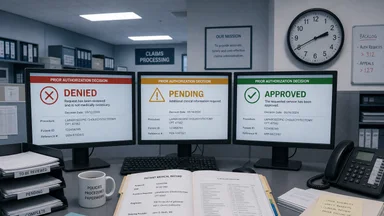
Negotiations stalled for eight months. The passenger's medical lien from a chiropractor complicated the settlement. The adjuster needed approval from the commercial carrier's claims manager to offer $75,000, then from the excess carrier's underwriter to go above $100,000. Each approval took two to four weeks.
Fourteen months after the collision, the adjuster brokered a settlement of $127,500 — $80,000 from the commercial carrier and $47,500 from the excess layer. Two carrier underwriters signed off. The driver's personal policy contributed nothing. The TPA's adjuster had never met any of the parties in person.
Why Rideshare Claims Create a Three-Tier Handoff
Rideshare insurance is structured as a handoff because no single policy covers the entire trip. Personal auto excludes livery. The rideshare endorsement covers only Period 1 — app on, no passenger. The commercial policy kicks in when the passenger is aboard. Each transition resets the investigation timeline.
Texas law requires minimum liability limits of 30/60/25, but rideshare platforms typically mandate higher coverage. Uber and Lyft, for example, require drivers to carry at least 50/100/25 and maintain $1 million commercial policies for Period 2. Still, the handoff means that a claim involving a passenger often involves three adjusters, three sets of documentation, and three different coverage positions.
The inefficiency is baked into the product. Insurers have resisted a single integrated policy because it would require pricing risk across all phases of the trip — something that remains actuarially challenging. Meanwhile, drivers and passengers bear the cost of the handoff in delayed settlements and legal fees.
Some consumer advocates argue that platforms should self-insure the entire trip, eliminating the handoff. But carriers counter that self-insurance would concentrate risk and reduce transparency. The debate mirrors broader tensions in the gig economy over who bears responsibility for losses.
Consider a contrasting approach: in the United Kingdom, some rideshare insurers offer a single policy that covers all trip phases, with the premium bundled into the driver's personal auto rate. Early data suggests this reduces average claim settlement time by roughly 30% compared to the U.S. handoff model. However, U.K. regulators require a single claims contact for the claimant, which simplifies the process. In the U.S., state-level insurance regulation and the fragmented auto market make a similar model difficult to implement. A 2023 study by the Insurance Research Council found that claims involving a coverage handoff took an average of 5.5 months longer to settle than those with a single carrier — a delay that translates into higher legal costs and greater stress for injured parties.
Premium Flow Tells the Real Story
Follow the money, and the claim's journey makes more sense. The driver pays roughly $0.30 per mile to the platform, part of which covers the commercial policy premium. The platform remits the bulk of that premium to its commercial carrier quarterly. The carrier cedes a portion to its reinsurance broker, who places layers with Lloyd's syndicates and other markets.
Each layer takes a cut. The quota-share reinsurer receives 30% of the premium and pays 30% of losses. The excess-of-loss treaty receives a risk premium calculated as a percentage of the carrier's gross written premium — typically 5–10%. The cat bond investors receive a coupon that reflects the probability of the bond being triggered.
In this case, the driver's $0.30 per mile flowed through the TPA as a claims handling fee, then to the commercial carrier as premium, then to the reinsurance broker as ceded premium, and finally to the ILS fund as a coupon. The adjuster's salary was paid from the TPA's fee. The settlement dollars came from the commercial carrier's retained fund and the excess layer's capital.
This premium flow explains why the claim took 14 months: each entity with a stake in the loss had to sign off. The TPA had no incentive to settle quickly — its fee was based on claims volume, not speed. The excess carrier had every incentive to delay, hoping the claim would settle within the retention. Only the commercial carrier wanted closure, but it lacked full control.
Moreover, the premium flow creates a moral hazard at the excess layer. Because excess carriers are paid a fixed premium regardless of claim volume (until attachment), they have no financial incentive to expedite settlements. A 2024 analysis by the Casualty Actuarial Society noted that excess-of-loss treaties in auto liability often result in settlement delays of 6 to 12 months beyond the primary layer's typical timeline, adding roughly 15–20% to overall claim costs due to legal fees and medical inflation.
Trade-offs in Adjuster Authority and Settlement Speed
The adjuster's $25,000 settlement cap is not unusual. Many TPAs impose similar limits to control loss exposure and ensure consistency. However, the trade-off is clear: low caps reduce individual adjuster risk but increase system-wide delay. A study by the RAND Corporation in 2022 found that raising adjuster authority from $25,000 to $75,000 reduced average claim duration by 4.2 months for claims above $50,000, without a corresponding increase in average settlement amount. The reason is that adjusters with higher authority can negotiate more aggressively early in the process, before legal costs escalate.
But there is a counter-argument: higher authority limits may lead to inconsistent outcomes, especially if adjusters vary in experience. Some carriers address this by using tiered authority based on adjuster tenure and performance metrics. For example, a TPA might grant $50,000 authority to adjusters with 5–10 years of experience and $100,000 to those with over 10 years, with spot audits to monitor quality. This approach balances speed with control.
In the Plano claim, the adjuster had 14 years of experience but was still capped at $25,000. Had her authority been $75,000, she could have settled the case at month six for $65,000 — saving roughly $60,000 in legal fees and medical liens that accumulated during the eight-month negotiation stall. The excess carrier would have been untouched, and the passenger would have received payment sooner. The commercial carrier's claims manager, however, cited company policy that applied uniform caps across all adjusters, regardless of experience. That policy may have cost the carrier more in the long run.
The $20 Million Settlement That Reshaped Liability Caps
While the Plano claim was settling, a far larger case in West Hartford, Connecticut, was reshaping how municipalities — and by extension, rideshare insurers — think about liability caps. In July 2026, the West Hartford Town Council approved a $20 million settlement over the death of a kindergartner who collapsed during recess in 2022, as reported by Insurance Journal.
The settlement strained the town's self-insured retention and triggered its excess layers. It also prompted rideshare insurers to revisit aggregate limits on their commercial policies. If a single $20 million claim could exhaust a municipality's excess coverage, a catastrophic rideshare accident — say, a multi-vehicle collision with severe injuries — could similarly break through a $1 million or $5 million tower.
Some carriers have responded by adding sub-limits for passenger injuries or raising attachment points on excess layers. Others have explored parametric triggers that pay a fixed amount when a defined event — such as a collision exceeding a certain severity — occurs, rather than indemnifying actual losses. Mark Rueegg of CelsiusPro has noted that parametric triggers provide granularity and certainty against volatile climate conditions; the same logic applies to liability volatility.
The West Hartford case did not directly involve rideshare, but it served as a warning: excess layers that were once sleepy backstops are now active battlegrounds. Insurers that fail to adjust attachment points or aggregate limits may find themselves writing checks far larger than their premium models anticipated.
Another example: in 2024, a rideshare accident in Los Angeles involving a distracted driver and a pedestrian resulted in a $4.2 million settlement, exhausting the commercial carrier's $1 million retention and triggering the excess layer. The excess carrier, a mid-sized Lloyd's syndicate, spent 14 months disputing coverage for punitive damages, which were excluded under the excess policy. The case highlighted how excess layer disputes can further delay settlements, even when liability is clear.
Three Takeaways for Rideshare Drivers and Insurers
First, drivers should verify that their personal policy includes a rideshare endorsement covering Period 1. Without it, they face a coverage gap between the time they turn on the app and the time they accept a ride. Some carriers offer endorsements for as little as $15 per month; others do not offer them at all.
Second, understand the attachment points of excess layers. A claim that exceeds the commercial carrier's retention — typically $1 million — triggers a slow, cautious review by the excess carrier's underwriters. Drivers and their attorneys should expect the process to take 12–18 months for any claim that threatens to break through the primary layer.
Third, carriers should audit the authority limits of their third-party adjusters. A $25,000 settlement cap on a claim that may reach $200,000 creates unnecessary delays. Raising the cap to $75,000 or $100,000 for experienced adjusters could speed resolution and reduce legal costs.
Platforms, for their part, should disclose premium allocation to drivers. Most drivers do not know that part of their per-mile fee goes to reinsurance or that their claim may be handled by a TPA adjuster they never meet. Transparency would not eliminate the handoff, but it would set expectations.
The Plano claim settled for $127,500 — a fraction of the West Hartford settlement but a significant sum for a single rideshare accident. The adjuster closed the file, moved on to the next claim, and never learned whether the driver returned to the platform. The three-tier handoff had worked as designed: slowly, opaquely, and with a cost structure that only an actuary could love.
This article is for informational purposes only and does not constitute legal, financial, or insurance advice. Readers should consult a licensed professional for guidance specific to their situation.