One General Liability Policy Mapped a Single Contractors Claim Into Five Carriers Excess Layers
A single contractor's general liability claim, originating from a routine construction defect at a mid-sized commercial building in the Midwest, cascaded through five excess layers before reaching its final indemnity near US$ 20–25 million. The incident, documented in industry loss runs but anonymized for confidentiality, illustrates how the excess-liability stack—a structure designed to spread risk—can concentrate it instead. Each layer was priced independently, often with limited visibility into the others, and the result was a combined payout that surprised several carriers. This article maps the claim's path, examines the pricing disconnects between primary and excess actuaries, and considers how recent market developments—from Canopius's US appointment to Allstate's catastrophe losses and PFAS litigation—are reshaping the tower.
One Claim, Five Layers: The Excess-Liability Stack Exposed
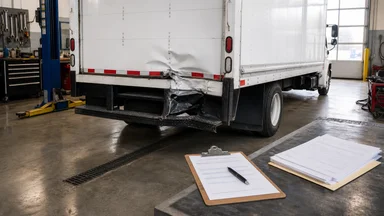
The claim began in 2023 when a subcontractor's faulty work on a commercial building caused water damage that led to mold remediation, structural repairs, and business interruption for the tenant. The primary general liability policy, with a US$ 1 million limit, responded first, covering defense costs and initial indemnity. But the total loss quickly exceeded that limit, triggering the first excess layer—a US$ 5 million policy from a regional carrier.
As the loss continued to mount, a second excess layer of US$ 5 million attached, followed by a third of US$ 5 million, a fourth of US$ 4 million, and finally a fifth of US$ 5 million. Each layer was underwritten by a different carrier, and none had full visibility into the others' pricing assumptions or loss picks. The combined indemnity, including defense costs, approached US$ 20–25 million—a figure that left at least two of the excess carriers facing losses that exceeded their modeled expectations.
The stacking of layers is not unusual in large commercial lines, but the magnitude of this claim—relative to the premiums collected across the tower—highlights a systemic risk. When each excess carrier prices its layer based on the primary's loss pick, errors compound upward. In this case, the primary's initial loss estimate was roughly US$ 2–3 million; the actual loss ran nearly ten times that.
Industry data suggest that such "tail events" in excess layers are becoming more common. A 2024 study by a major reinsurance broker found that claims exceeding US$ 10 million in general liability have increased roughly 30% since 2020, driven by construction defect litigation, product liability, and social inflation. Yet excess pricing has not kept pace, partly because actuaries lack shared data across layers.
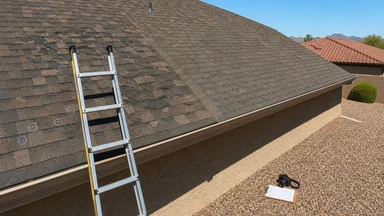
To put this in perspective, consider a comparable scenario: In 2022, a large roofing contractor in Texas faced a similar stacking event when a single hailstorm led to multiple construction defect claims from different building owners. The primary layer exhausted quickly, and three excess layers were triggered, resulting in a total payout of roughly US$ 15 million. That claim, like the one described here, exposed the same disconnect between primary loss picks and actual severity. In both cases, the excess carriers had not modeled the possibility that a single event could generate claims across multiple policy periods or multiple locations simultaneously.
Why Primary Limits Shrank While Attachment Points Rose
Over the past decade, primary general liability limits have remained flat at roughly US$ 1–2 million for most commercial accounts, while attachment points for excess layers have risen. Carriers have pushed attachment points higher to avoid the frequency of smaller claims, but this has created a gap: the same total coverage now requires more layers, each with its own pricing and underwriting.
For example, a contractor in 2015 might have bought a US$ 1 million primary and a US$ 4 million excess layer for US$ 5 million total. By 2025, that same contractor might need a US$ 1 million primary, a US$ 3 million first excess, and a US$ 3 million second excess to reach US$ 7 million, because attachment points rose from US$ 1 million to US$ 2 million or higher. The number of layers per risk has increased by roughly 30% since 2020, according to market surveys.
This fragmentation creates inefficiencies. Each excess carrier underwrites based on the primary's loss pick, but the primary's model may not account for severity tail risk. When the loss exceeds the primary's modeled range, the excess carriers are left holding a loss that their own models—based on the same flawed input—also underestimated.
Some risk managers have responded by buying "difference in conditions" policies that cover gaps between layers, but these are expensive and often exclude the very claims that cause stacking. Others have turned to captive insurers to self-insure the lower layers, but captives require significant capital and are not suitable for all firms. A 2025 survey by the Captive Insurance Companies Association found that roughly 15% of mid-sized contractors now use captives for the first US$ 1 million of GL exposure, up from 8% in 2020. This trend reflects growing frustration with the primary market's pricing and the desire for more control over claims handling.
Pricing Disconnect Between Primary and Excess Actuaries
The pricing disconnect between primary and excess actuaries is a structural feature of the liability insurance market, not a bug. Primary actuaries model frequency—how many claims will occur—and use loss development factors to estimate ultimate severity. Excess actuaries, by contrast, model severity directly, often using exposure curves that assume a distribution of claim sizes. But they rarely share raw claims data across layers.
In the five-layer claim described above, each excess carrier received a summary loss pick from the primary, but not the underlying claim file or the assumptions behind the pick. As a result, each carrier's model used a slightly different severity distribution, and none captured the correlation between layers. When the loss exceeded the primary's pick, all four excess layers were affected simultaneously, but their models had assumed that such a tail event was extremely unlikely.
Correlation assumptions are often simplified or omitted entirely. For example, if a single construction defect leads to multiple claims (e.g., from different tenants in a building), those claims can stack across layers, but excess models typically treat them as independent. Reinsurers have begun to demand layer-specific loss triangles that show the full development of claims across all layers, but such data is rarely shared in the primary-excess relationship.
This gap contributed to mispricing during the 2022–2025 hard market, when many excess carriers raised rates sharply without improving their loss modeling. As a result, some layers became overpriced for low-frequency claims but underpriced for tail events. The five-layer claim is a case in point: the premiums collected across the tower were adequate for expected losses, but the tail loss exceeded the total premium by a wide margin.
A deeper look at the actuarial methods reveals another layer of complexity. Primary actuaries often use Bornhuetter-Ferguson methods that blend expected losses with actual development, while excess actuaries rely on exposure curves like the ISO severity curves. These curves are calibrated on industry-wide data, not on the specific risk's own loss history. When a risk has a unique loss profile—such as a contractor specializing in high-rise buildings—the exposure curves may not apply. In the five-layer claim, the contractor's book of business included several large commercial projects, but the excess carriers used standard severity curves that underestimated the tail risk associated with complex projects.
Canopius US Appointment Signals Shifting Reinsurance Strategy
In July 2026, Canopius Group appointed Nadine Moore as CEO of its US business, a move that signals a strategic focus on specialty excess and reinsurance growth. According to a report by Risk & Insurance, the appointment aligns with a broader trend: reinsurers are demanding more technical insight from carriers, not just capacity. Moore's background includes underwriting complex liability towers, and her mandate is to deepen Canopius's expertise in layered risks.
The link between equipment breakdown risks and general liability towers is becoming more apparent. As Risk & Insurance noted in a separate article, equipment breakdown risks now require engineering-backed capacity, because a single mechanical failure can trigger claims across multiple layers. For example, a faulty boiler in a commercial building can cause property damage, business interruption, and third-party liability, all of which may attach to different layers of a tower.
Reinsurers are increasingly requiring carriers to provide detailed engineering reports and loss data before they will commit capacity to excess layers. This shift puts pressure on primary carriers to improve their data collection and sharing practices. Moore's appointment suggests that Canopius sees an opportunity to differentiate itself by offering technical underwriting expertise, rather than simply competing on price.
For risk managers, this trend means that excess carriers may become more selective, demanding more information about the underlying risk before quoting. Brokers will need to prepare detailed submissions that include not just loss runs, but also engineering assessments and claims narratives. The days of "spreadsheet-only" underwriting for excess layers may be numbered.
To illustrate the impact, consider a recent case where a manufacturer of industrial equipment faced a product liability claim that triggered three excess layers. The carrier that had the second excess layer required a full engineering analysis of the product's failure modes before agreeing to renew. That analysis revealed a design flaw that the manufacturer had not disclosed, leading to a significant premium increase. This level of scrutiny is becoming more common as reinsurers push for better data.
Allstate's Cat Losses Expose Aggregate Risk in Excess Towers
Allstate's pre-tax catastrophe losses for the second quarter of 2026 reached US$ 1.72 billion, according to Artemis.bm. The losses were driven by severe convective storms and wildfires, and they triggered annual aggregate catastrophe bonds that Allstate had issued to cover excess layers. When a single large event—or a series of events—exhausts multiple layers simultaneously, the aggregate risk becomes apparent.
In the context of general liability towers, the correlation between GL claims and natural catastrophe events is often ignored. For example, a hurricane can cause both property damage and liability claims (e.g., from slips and falls in damaged buildings), and those liability claims can stack across layers. But excess models typically treat catastrophe losses as independent of liability losses, which can lead to underestimation of aggregate exposure.
Allstate's experience highlights the need for carriers to model aggregate limits more conservatively. When a tower has multiple layers, each with its own aggregate limit, a single event can exhaust several of them at once. Reinsurers are now pricing aggregate limits more conservatively, requiring higher premiums for the same level of protection.
Risk managers should ensure that their excess towers have clear aggregate limits and that they understand how multiple claims from the same event could stack. Some policies include "reinstatement" provisions that restore limits after a loss, but these are expensive and may not be available for all layers. The five-layer claim did not involve a natural catastrophe, but the same aggregation risk applies to any event that generates multiple claims.
For a concrete example, consider the 2024 derecho that swept through the Midwest, causing widespread property damage and a surge in liability claims from slips and falls in damaged retail stores. One large retailer saw its primary GL layer exhausted within days, and two excess layers were triggered within a month. The aggregate limits on those layers were not designed for such a rapid succession of claims, and the retailer faced a coverage gap for subsequent claims. This scenario is becoming more common as climate change increases the frequency of severe weather events.
PFAS Lawsuits Threaten General Liability Towers Nationwide
In July 2026, New York's attorney general sued 3M, DuPont, Chemours, and other companies over PFAS contamination, alleging that they knowingly sold harmful "forever chemicals" used in cosmetics, non-stick cookware, and other products. The lawsuit, reported by Insurance Journal, seeks cleanup costs and damages that could run into billions of dollars. These claims fall under general liability policies, often with pollution exclusions, but the interpretation of those exclusions varies by state and by layer.
For chemical companies, excess layers may face coverage disputes if the pollution exclusions differ between the primary and excess policies. In some cases, the primary policy may have a broad pollution exclusion that bars coverage, while an excess policy may have a narrower exclusion, creating a gap that could leave the excess carrier on the hook. This "stacking" risk is similar to the one illustrated by the five-layer claim, but on a much larger scale.
Insurers face the prospect of multiple years of policies responding to the same long-tail claim, a phenomenon known as "stacking" of policy periods. If a company has been buying GL coverage for 20 years, and the PFAS contamination occurred over many years, each year's policy could be triggered, multiplying the available limits. This could exhaust towers that were designed for single-year losses.
PFAS litigation is still in its early stages, but it has already reshaped the GL market for chemical firms. Many carriers have added absolute pollution exclusions or raised attachment points for companies with PFAS exposure. Risk managers in the chemical sector should expect higher premiums and more restrictive terms, and they should work with brokers to map every layer's trigger, limit, and exclusion.
A 2025 analysis by a leading law firm estimated that the total liability for PFAS contamination across all industries could exceed US$ 100 billion, with a significant portion falling on excess layers. This is not a hypothetical risk; several major chemical companies have already received claims from multiple states, and the number of lawsuits is expected to grow. The stacking risk here is not just across layers within a single year, but across multiple policy years, potentially creating a cascade of losses that could destabilize the excess market.
Practical Takeaways for Risk Managers and Brokers
The five-layer claim offers several lessons for risk managers and brokers. First, map every excess layer's trigger, limit, and exclusion. Many risk managers rely on a single broker's summary, but the details matter: a difference in the definition of "occurrence" or "claim" can determine whether a loss attaches to a layer. Second, negotiate aggregate limits to avoid simultaneous exhaustion. Some carriers offer separate aggregate limits for each layer, but others apply a single aggregate across all layers. The latter can be dangerous if a single event triggers multiple layers.
Third, monitor regulatory actions like the New York PFAS lawsuit for emerging frequency. Early awareness of litigation trends can help risk managers adjust coverage before claims arise. Fourth, ask carriers for reinsurance loss triangles to benchmark their loss picks against industry data. If a carrier's assumptions are out of line with broader trends, that may warrant further inquiry.
As the market continues to harden, the structural issues in excess liability towers will become more visible. The five-layer claim is one data point in a broader pattern. Risk managers who take the time to understand their towers will be better positioned to negotiate terms and avoid surprises.
This article is for informational purposes only and does not constitute professional insurance or legal advice. Readers should consult qualified professionals for advice tailored to their specific circumstances. The examples and recommendations are general observations and may not apply to every situation.