An Algorithm Flagged One Back Surgery Claim Into Three Separate Utilization Reviews
In early 2025, a 48-year-old patient with degenerative disc disease was scheduled for lumbar fusion surgery at a major hospital system in the Midwest. The procedure had been recommended by an orthopedic surgeon after six months of failed conservative care. What should have been a routine prior-authorization process instead became an 11-week ordeal that exposed a quietly expanding practice in American health insurance: the stacking of multiple utilization reviews on a single claim.
One Claim, Three Reviews: The Case That Exposed Utilization Review Overreach
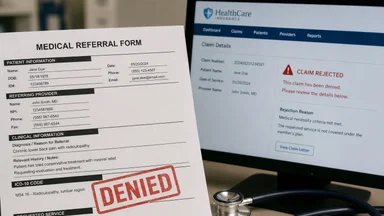
The patient's employer sponsored a self-funded health plan administered by a large third-party administrator. When the surgeon submitted a prior-authorization request for lumbar fusion — a procedure with a typical facility cost in the range of US$30,000 to $50,000 — the TPA's automated system flagged the claim for medical necessity review. That initial review, conducted by a nurse employed by the TPA, returned a denial based on a clinical guideline that recommended a minimum of six months of physical therapy before surgery. The patient had completed that therapy, but the reviewer cited a failure to document functional improvement.
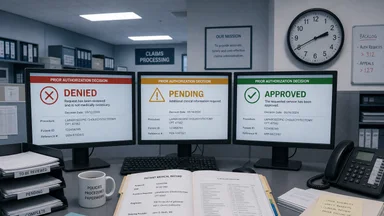
What happened next is the crux of the case. Instead of communicating the denial to the provider and initiating an appeal, the TPA's algorithm referred the same claim to a second utilization review vendor — an independent company contracted to provide second-opinion reviews. That vendor's physician reviewer determined that the surgery was medically necessary, given the patient's documented radiculopathy and MRI findings. The TPA, however, did not accept that determination. A third review was ordered, this time from a different vendor specializing in spine surgery. That reviewer denied the claim, citing a different guideline that recommended a trial of epidural steroid injections first.
The conflicting determinations left the patient and provider in limbo. The surgeon's office spent weeks on the phone with the TPA, the two vendors, and the employer's benefits department. No single entity had authority to resolve the dispute. The patient's surgery was postponed twice. By the time an internal grievance was filed and eventually upheld after 90 days, the patient had developed additional nerve compression that the surgeon testified could have been avoided with timely intervention. The surgeon's testimony, however, was not independently verified, and the causal link between the delay and the deterioration remains a matter of clinical opinion.
The administrative cost of the three reviews — estimated at roughly $200 to $400 each — was borne by the self-funded plan, meaning the employer ultimately paid for the redundancy. The patient's share was measured in delayed recovery and additional physical therapy that cost the plan roughly $12,000. An independent external review later overturned all three denials, but no penalty was imposed on the insurer or TPA for the redundant process.
How Utilization Review Became a Profit Center for TPAs
Utilization review was originally designed as a clinical quality check — a way to ensure that expensive procedures were appropriate and evidence-based. Over the past two decades, it has evolved into a significant revenue stream for third-party administrators and managed-care organizations. TPAs typically bill plan sponsors on a per-review basis, with fees ranging from roughly $150 to $400 per review, depending on complexity and whether a physician reviewer is required. For a TPA processing tens of thousands of prior-authorization requests annually, multiplying the number of reviews per claim directly increases revenue without requiring new clinical insight. In the case described above, the TPA earned fees for three reviews on a single claim — a claim that could have been resolved with one. The financial incentive to over-review is structural: no regulatory body caps the number of reviews per episode of care, and plan sponsors rarely audit the ratio of reviews to claims.
Industry estimates suggest that redundant reviews — defined as a second or third review on the same claim without new clinical information — occur in roughly 5 to 10 percent of high-cost surgical claims. For a large self-funded plan with 10,000 such claims annually, that translates to 500 to 1,000 unnecessary reviews, costing the plan between $75,000 and $400,000 per year in administrative fees alone. Those costs are ultimately passed to employees through higher premiums or reduced benefits.
The practice is not limited to self-funded plans. Fully insured plans administered by major carriers also show patterns of multiple reviews, though the financial incentive is less direct because the carrier bears the claim cost. Even so, carriers have been known to contract with multiple UR vendors to create the appearance of rigor, while the additional reviews rarely change the outcome. A 2024 study of prior-authorization denials found that when a second review was ordered, the determination changed in fewer than 10 percent of cases.
The Clinical Cost of Administrative Redundancy
The clinical consequences of delayed care are not abstract. In the lumbar fusion case, the orthopedic surgeon testified during the internal grievance that the 11-week delay allowed the patient's condition to worsen. The patient developed new radicular symptoms and muscle weakness that the surgeon attributed to ongoing nerve compression. Extended conservative care — additional physical therapy, pain management visits, and imaging — added roughly $12,000 in costs that the plan ultimately covered, though the patient also incurred copays and time lost from work.
The patient filed an internal grievance with the TPA, which was denied after 90 days. The denial letter cited the third vendor's determination as final. Only after the patient requested an independent external review — a process required under ERISA for certain plan types — did a board-certified orthopedic surgeon with no financial ties to any party review the full clinical record. That reviewer determined that the surgery met all applicable medical necessity criteria and that the prior denials were not supported by the evidence. The external review was binding, and the surgery was finally scheduled.
But the external review did not address the delay itself. No mechanism exists under current law to penalize an insurer or TPA for conducting multiple reviews that ultimately are found to be unnecessary. The patient's only recourse would be a civil lawsuit for breach of fiduciary duty under ERISA, which requires showing that the plan administrator acted arbitrarily and capriciously — a high bar that few plaintiffs clear. In practice, the cost of litigation and the difficulty of proving harm from delay alone deter most patients from pursuing claims.
The clinical literature on surgical delays is sparse but suggestive. A 2023 systematic review in the journal Spine found that delays of more than six months for lumbar fusion were associated with worse functional outcomes and higher rates of revision surgery. While the 11-week delay in this case falls short of six months, the surgeon argued that the patient's rapid deterioration during that period was atypical and likely preventable. The external reviewer's report noted that the patient's condition had changed between the initial request and the final approval, which may have affected the surgical outcome.
Legal and Regulatory Gaps That Permit This Practice
The Employee Retirement Income Security Act of 1974, which governs most employer-sponsored health plans, sets minimum standards for claims processing but does not explicitly limit the number of utilization reviews a plan may conduct on a single claim. ERISA requires that plans provide a full and fair review of denied claims, but it does not define what constitutes a reasonable number of reviews. As a result, plan administrators have wide discretion to order multiple reviews, especially when the claim involves high-cost procedures. For more on ERISA's claims procedure requirements, see Understanding ERISA Claims Procedure.
State insurance departments, which regulate fully insured plans, rarely audit utilization review frequency patterns. The National Association of Insurance Commissioners model act on utilization review includes standards for timeliness and clinical criteria but lacks specificity on redundant reviews. Only four states — California, Maryland, New York, and Washington — had introduced bills as of mid-2026 to cap the number of reviews per episode of care, and none had been enacted. The federal No Surprises Act, which took effect in 2022, addresses balance billing and surprise out-of-network charges but does not touch utilization review practices.
The regulatory gap is partly a function of data opacity. Insurers and TPAs are not required to report how many reviews they conduct per claim, and plan sponsors rarely request that data. Without transparency, regulators cannot identify patterns of over-reviewing. The NAIC has considered adding a data element for number of reviews per claim to its annual statement filings, but as of mid-2026 that proposal had not been adopted. Consumer advocates such as the National Patient Advocate Foundation have called for mandatory disclosure of review counts, arguing that the burden should shift to insurers to justify multiple reviews, rather than requiring patients to prove harm.
Some legal scholars have argued that redundant reviews could constitute a breach of fiduciary duty under ERISA, because plan administrators must act solely in the interest of participants and beneficiaries. If a TPA orders multiple reviews primarily to generate fees, that arguably violates the duty of loyalty. But ERISA fiduciary litigation is costly and fact-intensive, and courts have generally deferred to plan administrators' discretion unless the decision is clearly arbitrary. The lumbar fusion case did not result in a lawsuit; the patient settled for coverage of the additional therapy costs after the external review.
One counter-argument to regulatory intervention is that multiple reviews may sometimes be clinically justified. For example, a first review might miss a key clinical detail, and a second review could catch an error. Proponents of the current system argue that TPAs need flexibility to ensure accuracy, especially for high-cost procedures where a wrong approval could cost the plan hundreds of thousands of dollars. However, the case described here involved no new clinical information between reviews — each reviewer simply applied a different guideline. Without a mechanism to prevent purely duplicative reviews, the potential for abuse remains.
Technology as Enabler and Potential Fix
The automated prior-authorization software that flagged the lumbar fusion claim for review is part of a broader trend toward algorithmic claims processing. These systems use clinical guidelines and claims data to identify claims that require human review. In theory, they should reduce unnecessary reviews by applying consistent criteria. In practice, they often generate false positives that trigger additional manual reviews, creating a cycle of redundancy.
In the case described, the TPA's algorithm flagged the claim based on a diagnosis code and procedure code combination that had a historical denial rate above a certain threshold. But the algorithm did not check whether a review had already been initiated by another vendor. The system lacked interoperability with the two external vendors, so each review was conducted independently without knowledge of the others. This is a common technical limitation: claims data often flows through separate portals that do not share status information.
Some carriers and TPAs are now testing single-review mandates, where a claim can be reviewed only once unless new clinical information is submitted. Early pilot results from a large national carrier, reported in 2025, showed that a single-review policy reduced administrative costs by roughly 15 to 20 percent for high-cost surgical claims, with no increase in inappropriate approvals. The carrier used a machine learning model to flag claims that had a high probability of being overturned on appeal, and those claims were routed to a senior physician reviewer for a single, definitive determination.
Interoperability standards could also help. If all UR vendors shared a common claims status database, a second vendor could see that a review was already in progress and decline to initiate a new one. The industry has been slow to adopt such standards, partly because TPAs have little financial incentive to reduce review volume. But plan sponsors are beginning to demand interoperability as a condition of contract renewal. A 2026 survey by the Business Group on Health found that 42 percent of large employers planned to require their TPA to participate in a shared claims-status network within two years.
Machine learning models that predict which claims are likely to be denied on medical necessity grounds could reduce false positives by an estimated 20 to 40 percent, according to pilot studies. By routing only high-risk claims to human reviewers, these models could lower the overall review volume and reduce the temptation to order multiple reviews. However, the models themselves must be transparent and free of bias. If they systematically flag claims from certain providers or patient populations, they could create new forms of inequity.
What Plan Sponsors Can Do to Prevent Over-Reviewing
Self-funded employers — which bear the financial risk of their health plans — have the most leverage to reform utilization review practices. The first step is to audit TPA contracts for explicit limits on the number of UR passes per claim. A typical contract might allow unlimited reviews at the TPA's discretion. Plan sponsors can negotiate a cap of one or two reviews per episode of care, with an exception only if the provider submits new clinical information. Some employers have begun including language that requires the TPA to use a single vendor for all reviews on a given claim. For a primer on self-funded plan structures, see Self-Funded Plan Basics.
Another strategy is to require flat-fee UR pricing instead of per-review billing. Under a flat-fee model, the TPA receives a fixed monthly or per-member payment for all utilization review services, removing the incentive to multiply reviews. A number of large TPAs now offer flat-fee options, though they are often priced higher to compensate for the lost volume. Plan sponsors can negotiate a blended rate that includes a base fee plus a small per-review charge capped at a certain number per claim.
Quarterly reporting of UR-to-claim ratios by procedure code can reveal patterns of over-reviewing. If a TPA is conducting an average of 2.5 reviews on lumbar fusion claims while the industry average is 1.2, that is a red flag. Plan sponsors can demand that the TPA explain the discrepancy and implement corrective action. Some employers have included clawback provisions in their contracts, requiring the TPA to refund fees for any review that is later overturned by an external reviewer. This creates a direct financial disincentive for unnecessary reviews.
Plan sponsors can also leverage their purchasing power to demand participation in shared data networks that flag duplicate referrals. If a claim has already been reviewed by one vendor, the system should block a second review unless the first review was incomplete. This requires technical integration, but several large TPAs have already built such systems for their own internal processes. Extending them to external vendors is a matter of contract requirements and industry standards.
Systemic Consequences of Redundant Reviews
The lumbar fusion case is not an isolated incident. Similar patterns have been documented in other high-cost procedures, including spinal cord stimulators, hip and knee replacements, and certain cancer treatments. When an insurer or TPA orders multiple reviews on the same claim, the effect is a de facto delay tactic — the claim is not denied outright, but it is slowed to the point where some patients give up or their condition worsens. The distinction between a legitimate clinical review and an obstructionist process can be difficult to draw, especially when each individual review appears reasonable in isolation.
The industry lacks a basic transparency metric: the average number of utilization reviews per claim by procedure code. Without that data, it is impossible to identify outliers or track trends. The National Committee for Quality Assurance, which accredits health plans, does not currently require plans to report review volume. The National Patient Advocate Foundation has called for a national database of utilization review determinations, similar to the all-payer claims databases that exist in several states. Such a database could reveal which plans and TPAs are most likely to order multiple reviews.
State and federal regulators face growing pressure to define what constitutes a reasonable number of utilization reviews. The California bill introduced in early 2026 would have limited reviews to one per claim unless the plan could demonstrate a clinical reason for a second review. It did not pass, but similar legislation is expected in other states. At the federal level, the Department of Labor has authority under ERISA to issue regulations clarifying the standard for full and fair review, but it has not done so. The lumbar fusion case has been cited by advocacy groups as an example of why such regulations are needed.
Self-funded employers, which cover roughly 60 percent of privately insured Americans, hold the key to reform. They are the ultimate payers and can demand changes in TPA contracts. But many employers are unaware of the practice or lack the expertise to audit their TPA's behavior. As awareness grows, more employers are likely to include UR limits in their requests for proposals. Whether these measures will be sufficient to curb over-reviewing remains uncertain. The financial incentives for TPAs to conduct multiple reviews are deeply embedded, and without regulatory mandates or robust enforcement, some degree of redundancy may persist. The lumbar fusion case illustrates both the potential for reform and the obstacles to achieving it.
This article is for informational purposes only and does not constitute professional advice. Readers should consult their plan documents, legal counsel, or benefits consultants for guidance specific to their situation.