A Parametric Flood Trigger Overrode a Houston Homeowner’s Wind-Only Policy at Landfall
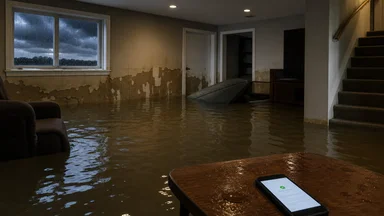
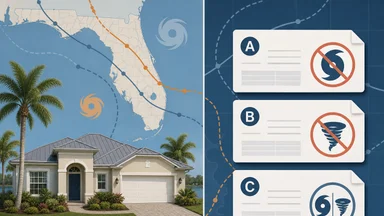
When Hurricane Francine approached the Texas coast in late 2025, a homeowner in the Kingwood suburb of Houston felt prepared. The wind-only policy on the house had a deductible set at winds of roughly 95 miles per hour. The storm's sustained winds at landfall were later reported as around 85 miles per hour, so the roof stayed intact. But storm surge pushed water miles inland through bayous, flooding the basement with several feet of water. The policy explicitly excluded flood damage. Yet within three days, a deposit of roughly $25,000 appeared in the homeowner's account, triggered not by an adjuster's inspection but by a parametric trigger based on rainfall data. This case study examines how that payout worked, the gaps it filled, and the risks it introduced.
The Storm That Didn't Break the Roof
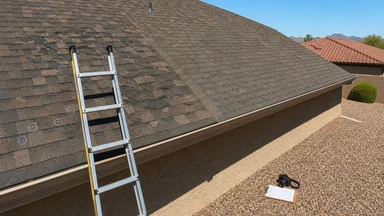
Hurricane Francine, a Category 1 storm when it hit the Texas coast, brought wind speeds that peaked around 85 miles per hour in the Houston area, according to the National Hurricane Center. The homeowner's wind-only policy, typical for inland suburbs where flood risk is perceived as low, required sustained winds of at least 95 miles per hour to trigger the deductible. The roof suffered minor shingle loss but no structural breach. The real damage came from water: storm surge funneled through the Galveston Bay system and into the San Jacinto River, then into residential bayous. The basement, finished with drywall and carpet, took on about three feet of water. The policy's flood exclusion meant the homeowner bore that loss entirely—until a parametric add-on kicked in.
The parametric product, sold as a low-cost supplemental endorsement, had been on the policy for about two years. It was designed to pay a fixed amount when accumulated rainfall from a named storm exceeded a threshold at a designated NOAA gauge. The threshold was set at roughly 10 inches of rain within a 48-hour window. Francine dropped about 12 inches at the gauge located roughly three miles from the property, according to Harris County Flood Control District data. The payout formula was simple: $2,500 per inch above the threshold, up to a cap of $30,000. The trigger paid $25,000.
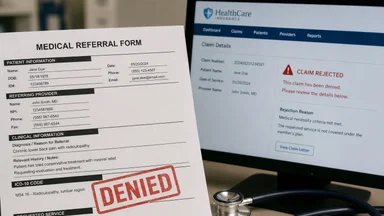
No adjuster visited the property. No receipts were required upfront. The deposit arrived within 72 hours of the trigger being confirmed, according to the homeowner's account. The funds were used to cover the cost of water extraction, drywall replacement, and flooring—expenses that would otherwise have been out-of-pocket. The traditional wind-only claim for the roof damage was still pending weeks later, held up by adjuster backlogs and disputes over whether the shingle loss was wind-related or due to age. The parametric payout, by contrast, was frictionless.
This case is not unique. As parametric insurance products proliferate in the U.S. property market, stories like this are becoming more common. But they also raise questions: What happens if the gauge fails? What if the rainfall threshold is set too high or too low? And how do carriers ensure that these products don't become a backdoor for covering excluded perils?
How a Parametric Trigger Overrode Policy Exclusions
The mechanism behind the payout is straightforward. The parametric endorsement was linked to a specific rainfall gauge operated by the Harris County Flood Control District. When the storm passed, the gauge recorded 12.3 inches of rain over 48 hours, exceeding the 10-inch threshold. The trigger was automated: a data feed from the district to the carrier's system verified the reading, and the payment was initiated without human intervention. The insured did not need to prove that the rain caused the flood damage; the trigger assumed a correlation between rainfall and loss, a concept known as parametric basis risk.
Basis risk is the chance that the parametric trigger does not perfectly match the insured's actual loss. In this case, the correlation was strong: the rain that fell on the property was roughly the same as at the gauge, and the flood depth was consistent with the rainfall volume. But if the gauge had malfunctioned or if the storm had dropped less rain at the gauge while flooding the property from a different source (e.g., storm surge from a different direction), the trigger might not have paid. The homeowner accepted that risk in exchange for speed and simplicity. The payout formula was fixed and transparent. For each inch of rainfall above the 10-inch threshold, the policy paid $2,500, up to $30,000. The total of $25,000 covered most of the flood damage, which the homeowner estimated at around $35,000, including structural repairs and replacement of personal property. The remaining $10,000 came from savings. The parametric product was not designed to make the insured whole, but to provide liquidity quickly when a traditional claim would be delayed or denied.
From the carrier's perspective, the parametric trigger reduced claims handling costs and moral hazard. There was no need to send an adjuster to assess whether the damage was caused by flood or wind, no debate over policy language, and no risk of fraud through inflated loss estimates. The payout was predetermined and automatic. But the carrier also took on basis risk: if the trigger paid but the homeowner suffered no flood damage, the carrier would have overpaid. In this case, the overpayment risk was mitigated by the strong historical correlation between heavy rainfall and flood losses in the Houston area.
The Gap Between Wind-Only and All-Risk Coverage
Wind-only policies are common in inland Texas suburbs, where homeowners often assume that flood risk is limited to coastal zones or designated floodplains. The reality is different: storm surge can travel miles inland through rivers and bayous, and heavy rainfall from hurricanes can cause flash flooding far from the coast. The National Flood Insurance Program (NFIP) maps, which many homeowners rely on, may not capture this risk accurately. In the Houston area, a significant portion of flood claims come from properties outside the high-risk Special Flood Hazard Areas.
Many homeowners skip flood insurance after years without a loss, seeing it as an unnecessary expense. The average NFIP policy costs roughly $700 to $1,000 per year, while a parametric add-on might cost $200 to $500 annually. The parametric product in this case was sold as a low-cost supplemental option, often marketed as a "fast-cash" alternative to traditional flood insurance. But it is not a substitute: the payout is capped and may not cover the full loss. For the homeowner, the parametric payout was a welcome bridge, but it did not cover the full replacement cost of the basement renovation.
The gap between wind-only and all-risk coverage is a persistent issue in the U.S. property insurance market. Private flood insurance has grown in recent years, but penetration remains low. Parametric products are filling some of that gap, but they are not a panacea. The Insurance Information Institute estimates that only about 15–20 percent of homeowners in hurricane-prone areas have flood insurance, and many of those have policies with high deductibles or low limits. The parametric trigger offers a way to get cash quickly, but it does not address the underlying need for comprehensive coverage.
For carriers, the appeal of parametric products is clear: they reduce claims handling costs, speed up payments, and offer a way to differentiate in a competitive market. But they also require careful underwriting to ensure that the trigger is correlated with loss and that the premium is adequate. In this case, the carrier used historical hurricane tracks and rainfall data to set the threshold at 10 inches, a level that was exceeded in roughly one in ten years for that gauge, based on a 30-year dataset. The premium was set to cover expected losses plus a margin for basis risk and expenses.
Data Provenance and Basis Risk in Practice
The success of a parametric trigger depends on the quality and reliability of the data source. In this case, the data came from a gauge operated by the Harris County Flood Control District, a government agency with a robust network of sensors. The gauge was calibrated regularly and had a history of reliable readings. But even with a well-maintained system, failures happen. A gauge can be damaged by the storm itself, or a power outage can interrupt data transmission. The policy included a fallback: if the primary gauge failed, a secondary gauge within 10 miles would be used. In this storm, both gauges recorded similar readings, so no fallback was needed.
Basis risk also arises from the spatial correlation between the gauge and the property. The gauge was three miles from the house, which is considered acceptable for a flood trigger in a flat, urban area. But if the property had been on a hill while the gauge was in a low-lying area, the rainfall at the property might have been lower, yet the trigger would still pay. Conversely, the property could have received more rain than the gauge, leaving the homeowner undercompensated. The insured accepted this risk when purchasing the endorsement, but not all homeowners understand the concept of basis risk.
Modeling firms like RMS and AIR Worldwide have developed models to estimate basis risk for parametric triggers. These models use historical storm data, topography, and gauge networks to simulate the distribution of outcomes. The carrier in this case used a model from a third-party vendor to set the threshold and premium. The model indicated that the 10-inch threshold had a roughly 10 percent annual probability of being exceeded, which aligned with the carrier's risk appetite. No litigation arose from this claim; both parties accepted the payout as fair.
For the insurance industry, parametric triggers represent a shift from indemnity-based to index-based insurance. This shift reduces moral hazard—the insured has no incentive to exaggerate a loss, since the payout is fixed—but it also introduces new risks. Regulators are still catching up. The Texas Department of Insurance allows parametric triggers as endorsements to traditional policies, but requires clear disclosure that the payout may not match the actual loss. The National Association of Insurance Commissioners (NAIC) has developed a framework for parametric products, but adoption varies by state.
Investor Appetite for Parametric Cat Bonds Grows
The parametric trigger in this case was part of a broader trend: the securitization of parametric risk through catastrophe bonds. In mid-2026, Leadenhall Capital Partners closed the Tranquil Re 2026-1 cat bond at $75 million, with Gallagher Securities noting strong investor demand. According to a report on Artemis.bm, the bond was structured to cover named storm and earthquake risks using parametric triggers. Investors were attracted by the diversification benefits: catastrophe bonds have low correlation with traditional financial markets, as highlighted by Sage Advisory's Andrew Poreda in a recent report.
Parametric cat bonds reduce moral hazard for investors because the payout is based on an objective index, not on the insurer's claims experience. This makes them easier to price and less vulnerable to adverse selection. The Tranquil Re bond, for example, used a parametric trigger based on wind speed and storm location, similar to the rainfall trigger in the Houston case. Investors receive a premium for bearing the risk that the trigger is activated, and if the trigger is not met, they keep the premium. This structure appeals to pension funds and other institutional investors seeking uncorrelated returns.
But the growth of parametric cat bonds also raises concerns about basis risk at the investor level. If the parametric trigger does not align with the underlying losses of the insurer, the bond may not provide the intended capital relief. In the Houston case, the carrier had not hedged its parametric exposure through a cat bond, but some carriers are beginning to do so. The market for parametric ILS (insurance-linked securities) is still small, but it is growing. According to Artemis.bm, issuance of parametric cat bonds reached roughly $2 billion in 2025, up from $1.5 billion the year before.
For investors, the key is to understand the basis risk of the parametric index. Poreda of Sage Advisory has noted that cat bonds offer diversification when it is needed most—during market stress—but that investors must carefully assess the index design. In the Houston case, the rainfall gauge was well-vetted, but not all parametric triggers are as robust. Some use satellite data or model output, which can introduce additional uncertainty. The cat bond market is still maturing, and the long-term performance of parametric structures will depend on how well they manage basis risk across a range of events.
Regulatory and Underwriting Lessons for Carriers
The Houston case offers several lessons for carriers considering parametric triggers. First, the trigger must be correlated with loss. The carrier used historical data to set a threshold that had a reasonable probability of being exceeded, but the correlation between rainfall and flood damage is not perfect. In some storms, heavy rain may not cause flooding if the ground is dry or if drainage systems are adequate. Carriers need to validate the trigger against actual loss data from past events to ensure that the payout is neither too frequent nor too rare.
Second, clear disclosure is critical. The Texas Department of Insurance requires that parametric endorsements be clearly labeled as non-indemnity products, and that the insured acknowledge that the payout may not cover the full loss. In this case, the homeowner signed a disclosure form at the time of purchase. But industry surveys suggest that many consumers do not fully understand how parametric triggers work. Carriers should invest in consumer education to avoid disputes later.
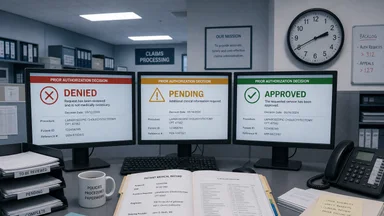
Third, reinsurers are increasingly pricing parametric layers using simulated events. The carrier in this case purchased reinsurance for its parametric exposure through a traditional excess-of-loss treaty, but some carriers are exploring parametric reinsurance as well. The advantage of parametric reinsurance is that it is quicker to settle, but the basis risk is passed to the reinsurer. The case study is also used in SIU training to help adjusters distinguish between legitimate parametric claims and potential staging of flood damage to trigger a parametric payout. While no evidence of fraud was found here, the SIU team noted that the speed of the payout could be exploited if a homeowner deliberately caused water damage after a storm.
Finally, the case illustrates the importance of integrating parametric products into a broader risk management strategy. The homeowner's wind-only policy left a significant gap that the parametric trigger only partially filled. For carriers, the opportunity is to offer parametric add-ons as a complement to, not a replacement for, comprehensive coverage. The risk is that consumers may view the parametric product as sufficient and forgo traditional flood insurance, leaving them underinsured in a major event. The industry is still working out the optimal balance.
This article is for informational purposes only and does not constitute professional insurance or financial advice.