A Single Collision Claim Forced a Fleet Operator Through Three Independent Adjuster Reviews
A single fender bender involving a delivery truck should have been a routine claim. Instead, it triggered three independent adjuster reviews, each applying different criteria and timelines, and left the fleet operator waiting months for a final settlement. The experience reveals how standard commercial auto policies, especially those covering multiple vehicles, can invite repeated scrutiny that delays payouts and inflates costs.
One Collision, Three Adjusters, One Fleet Operator's Nightmare
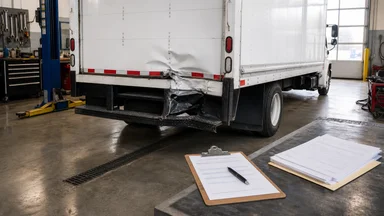
The incident was straightforward: a delivery truck backed into a parked car at a loading dock. Damage was moderate, with the other vehicle's rear bumper and quarter panel needing replacement. The fleet operator reported the claim to their primary insurer, expecting a quick resolution. Instead, the claim was assigned to an adjuster who took 45 days to make a liability decision, even though video footage clearly showed the truck at fault.
After the liability decision, the claim was transferred to a second adjuster who reopened the coverage limits analysis. This adjuster questioned whether the policy's per-accident limit applied correctly and requested additional documentation about the fleet's schedule and vehicle usage. That review added another 30 days.
Then a third adjuster entered the picture, this time from the excess carrier. That adjuster challenged the repair method recommended by the primary insurer's appraiser, arguing that aftermarket parts should be used instead of OEM parts. The third adjuster's review reset the internal approval clock, and the operator spent another 45 days waiting for a decision on parts and labor.
Throughout the process, communication between the three adjusters was minimal. The operator had to repeat the same information multiple times, and no single authority had the full picture. The final settlement came about five months after the collision, but only after the operator's broker intervened and escalated the case.
Why Commercial Fleet Claims Attract Extra Scrutiny
Fleet policies often involve multiple coverage layers. A typical arrangement includes a primary insurer covering losses up to a certain threshold, an excess carrier providing additional limits above that, and sometimes a reinsurer backing the excess carrier. Each layer has its own claims team, and each team has the contractual right to review the claim independently.
Claims above a certain dollar amount—often around $100,000—get triaged for severity. In this case, the total estimated loss was about $85,000, but the potential for subrogation and the involvement of multiple vehicles pushed it into a higher scrutiny category. Some carriers also rotate adjusters after 30 to 60 days to prevent bias or burnout, which can introduce new reviewers who want to re-examine decisions.
There is no statutory timeline for multi-tier reviews. Unlike personal auto insurance, where many states impose deadlines for claim handling, commercial fleet policies are largely governed by contract language that gives insurers broad discretion to "reasonably" investigate and re-examine claims. That vagueness leaves operators in limbo.
Industry data from the mid-2020s suggests that commercial auto claims with multiple adjuster reviews take, on average, 40 to 60 percent longer to settle than single-adjuster claims. For a fleet operator whose trucks generate revenue every day, that delay can be costly.
The Three Review Stages That Dragged On
First Adjuster: Liability Decision Took 45 Days
The first adjuster assigned to the claim was responsible for determining fault. Despite clear video evidence, the adjuster requested a police report, interviewed the driver, and asked for a diagram of the loading dock. The operator's broker later learned that the adjuster was handling a high caseload and prioritized other claims. By the time liability was confirmed, 45 days had passed.
Second Adjuster: Reopened Coverage Limits Analysis
Once liability was decided, the claim was transferred to a second adjuster who focused on coverage limits. This adjuster questioned whether the policy's per-accident limit of $1 million applied correctly, given that the truck was used for both local deliveries and occasional long-haul trips. The adjuster requested logs showing the vehicle's routes and asked whether the driver had proper endorsements. That analysis took another 30 days.
Third Adjuster: Questioned Repair Method and Replacement Parts
The third adjuster came from the excess carrier, which had a financial stake in the settlement. This adjuster argued that the primary insurer's appraiser had overestimated repair costs by specifying OEM parts. The adjuster demanded a re-inspection and insisted on aftermarket parts, which the operator opposed because of warranty concerns. The dispute took 45 days to resolve, with the final compromise being a mix of OEM and aftermarket parts.
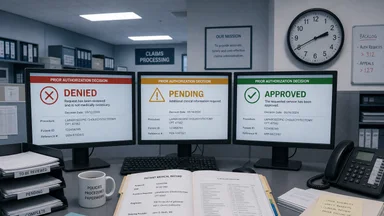
Each review reset the internal approval clock. The operator's broker noted that the primary insurer's claims system required a new supervisor sign-off after each adjuster's review, adding another layer of delay. Communication between the three adjusters was minimal; the operator often had to forward emails from one adjuster to another.
Another Real-World Example: A Multi-Vehicle Accident in a Distribution Fleet
Consider a different scenario: a distribution fleet operating 50 box trucks in a metropolitan area. One of its trucks was involved in a sideswipe collision with a city bus, causing moderate damage to both vehicles. The estimated loss was around $120,000, triggering automatic review by both the primary insurer and the excess carrier. The primary adjuster took 35 days to confirm liability, but then a second adjuster—this time from the excess carrier—questioned whether the driver had been properly trained on lane-changing procedures, citing a vague policy exclusion for "failure to maintain safe operation." That dispute added 40 days. A third adjuster from the reinsurer later demanded an independent engineering report on the bus's structural integrity, adding another 50 days. The total delay exceeded six months, during which the distribution company had to lease two replacement trucks at a cost of roughly $300 per day each, totaling over $54,000 in rental expenses alone.
Policy Language That Invites Repeated Reviews
Standard commercial auto policies, such as those based on ISO form CA 00 01, give insurers the right to "investigate and settle any claim or suit" as they see fit. The word "reasonably" appears in many clauses, but what is reasonable is left to the insurer's interpretation. There is no explicit limit on how many adjusters can be assigned to a single claim.
Subrogation potential kept the file open longer. The fleet operator's policy included a subrogation clause that allowed the insurer to pursue recovery from the other party. Because the other vehicle was uninsured, the insurer spent weeks evaluating whether to pursue the driver personally, which delayed the settlement while the adjuster gathered financial information.
Fleet policies often have higher deductibles and self-insured retentions. In this case, the operator had a $10,000 deductible, which meant the insurer was only paying the amount above that threshold. But the deductible also gave the insurer less incentive to settle quickly, since the operator bore the first layer of loss.
Ambiguity around "actual cash value" triggered disputes. The third adjuster argued that the damaged vehicle's actual cash value was lower than the primary insurer's estimate, which would reduce the total payout. The operator had to provide maintenance records and a recent appraisal to support their valuation, adding another two weeks to the process.
The Hidden Cost of Delayed Settlements
While the operator waited for the claim to be resolved, the damaged truck sat in a repair shop. Vehicle downtime cost the operator roughly $500 to $800 per day in lost revenue, depending on the delivery contracts. Over five months, that added up to between $75,000 and $120,000 in lost income—far more than the repair cost itself.
Repair shop storage fees began accruing after 30 days. The shop charged $50 per day for storage, which the operator had to pay out of pocket because the insurer would not authorize repairs until the adjusters agreed on the scope. Storage fees alone added about $6,000 to the total cost.
The open claim status also affected the operator's insurance premium at renewal. Insurers view open claims as a risk indicator, and the operator faced a premium surcharge of roughly 15 to 20 percent at the next renewal, adding thousands of dollars in additional costs over the following year.
To keep the business running, the operator had to borrow money to rent a temporary replacement vehicle. The rental cost about $200 per day, and the loan interest added another layer of expense. The delayed payout also affected the operator's quarterly loss ratios, which made it harder to negotiate favorable terms with insurers in the future.
Trade-offs and Counter-Arguments: When Multiple Reviews Might Be Beneficial
Not every fleet operator sees multi-tier reviews as purely negative. Some argue that multiple adjuster perspectives can catch errors and prevent underpayment. For instance, in the distribution fleet example above, the third adjuster's request for an engineering report ultimately revealed that the bus had pre-existing structural damage, reducing the fleet operator's liability by roughly 30 percent. That discovery would not have been made if only one adjuster had reviewed the claim.
Similarly, excess carriers have a legitimate interest in ensuring that primary carriers do not inflate settlements to exhaust their own limits. From the excess carrier's viewpoint, a second or third review is a safeguard against collusion or sloppy appraisal. In some cases, the additional scrutiny can even benefit the policyholder by uncovering coverage that the primary adjuster overlooked—for example, an applicable endorsement for rental reimbursement that the first adjuster missed.
However, the key is balance. When reviews are conducted in parallel rather than sequentially, or when there is a clear escalation protocol, the benefits can be realized without months of delay. The problem in the original case was not the number of reviews but the lack of coordination and the resetting of approval clocks.
How Fleet Operators Can Shorten the Review Chain
One of the most effective strategies is to require a single point of contact for multi-tier claims. Some brokers now negotiate a "claims advocate" clause in the policy, designating one person at the primary insurer who coordinates all adjuster reviews and keeps the operator informed. This can reduce duplication and speed up decisions.
Operators can also negotiate a maximum review timeline in policy endorsements. For example, an endorsement might state that the insurer must complete its liability investigation within 30 days, or that any adjuster rotation must not reset the approval process. While not all carriers will agree, some specialty insurers offer such terms for fleets with good loss histories.
Using telematics data to pre-validate accident details can also help. If the operator can provide GPS coordinates, speed data, and braking patterns immediately after a collision, the adjuster has less reason to request additional documentation. Some telematics providers now offer automated claim reports that insurers accept as evidence.
Demanding transparency on adjuster rotation policies is another step. Operators should ask their broker to include a clause requiring the insurer to notify the operator before transferring a claim to a new adjuster and to explain the reason for the transfer. This gives the operator a chance to object if the transfer seems unnecessary.
Finally, operators can consider hiring a dedicated claims advocate or third-party auditor. For fleets with dozens of vehicles, the cost of an advocate—often a flat monthly fee or a percentage of claims savings—can be offset by faster settlements and reduced downtime. Some advocates specialize in commercial auto claims and know which adjusters to escalate to.
Conclusion: The Human and Financial Toll of Fragmented Claims Handling
The three-adjuster saga described at the outset is not an anomaly. It reflects a systemic issue in commercial fleet insurance: the lack of integration between coverage layers and the absence of enforceable timelines. While some degree of multi-tier review is inevitable for large claims, the current process often prioritizes the insurer's internal checks over the policyholder's need for speed.
Fleet operators who understand the mechanics—and who proactively negotiate policy language, leverage technology, and demand accountability—can reduce the likelihood of being trapped in a months-long review cycle. The cost of inaction is not just the repair bill; it is the lost revenue, the storage fees, the premium surcharges, and the operational strain of a vehicle out of service.
As one fleet manager put it, "The claim itself was a few thousand dollars. The downtime cost us six figures. Next time, I'll have a claims advocate on speed dial."
This article is for informational purposes only and does not constitute professional insurance advice. Coverage terms vary by policy and jurisdiction. Consult a licensed broker or attorney for guidance specific to your situation.