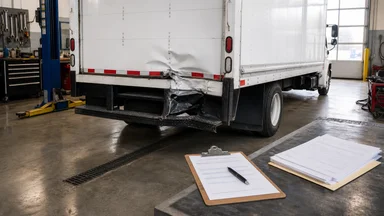
One Ride-Share Claim Required Three Adjusters to Agree on a Single Braking Event
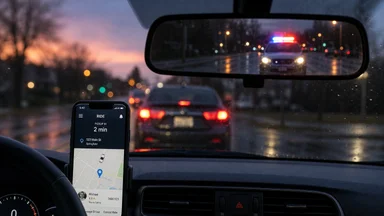
On a rainy Tuesday evening in Austin, Texas, a ride-share driver braked at an intersection. The car behind him did not stop in time. The resulting rear-end collision was minor—no airbags deployed, no visible injuries—but the insurance claim that followed required three separate adjusters to agree on a single braking event. Each adjuster applied different coverage rules, interpreted telematics data differently, and answered to a different supervisor. The payout took weeks.
A Single Braking Event, Three Adjusters, One Payout
The driver, who worked for a major ride-share platform, had a personal auto policy with a national carrier and a ride-share gap endorsement that covered the period between ride requests. At the moment of the collision, he was en route to pick up a passenger—a phase that falls under the ride-share company's contingent liability coverage. That created a tripartite claim structure: the personal auto adjuster handled the driver's own vehicle damage under collision coverage; the ride-share company's third-party adjuster managed the liability claim from the other driver; and a separate commercial adjuster from the ride-share insurer oversaw the bodily injury exposure.
The central dispute was whether the driver had braked suddenly or gradually. The other driver claimed a hard stop gave him no reaction time. The ride-share driver insisted he braked normally. Telematics data from the ride-share app recorded a deceleration rate of roughly 0.6 g, while the vehicle's event data recorder (EDR) showed a slightly higher spike. Each adjuster interpreted the data through the lens of their own coverage. The personal auto adjuster, focused on first-party physical damage, was less concerned with fault allocation. The commercial adjuster, facing a potential bodily injury claim, needed to establish negligence. The ride-share company's adjuster had to determine whether the driver was within the coverage window at the exact moment of impact.
Disagreement among the three adjusters delayed the claim for almost four weeks. The personal auto adjuster approved the driver's vehicle repair quickly, but the liability portion remained unresolved. The commercial adjuster wanted a police report that took ten days to obtain. The ride-share company's adjuster requested raw telematics logs, which the app provider took another week to produce. None of the three had full visibility into the others' workflows. The claimant eventually received a settlement offer that covered repair costs but not the full rental car reimbursement he sought.
Why Ride-Share Claims Multiply the Layers of Review
Ride-share insurance is a patchwork of overlapping policies. Personal auto policies explicitly exclude commercial use, so drivers must rely on gap coverage offered by the ride-share company or purchased separately. During Period 1—when the driver has the app on but no ride accepted—the ride-share company provides limited liability coverage, typically around US$ 50,000 per person and US$ 100,000 per accident. During Period 2, when a ride is accepted, the company's commercial policy applies, often with higher limits. Period 3, while transporting a passenger, is fully covered by the company's commercial policy. But the driver's personal policy may still cover physical damage to the vehicle, creating a split between first-party and third-party handling.
State regulations add further complexity. Some states require ride-share companies to provide coverage during all periods; others allow gaps. In Texas, the ride-share law mandates that companies maintain at least US$ 1 million in liability coverage during Periods 2 and 3, but the driver's personal insurer may still deny a claim if the loss occurred during Period 1 without proper gap coverage. Adjusters must verify the exact timestamp of the collision and match it to the driver's app status. A discrepancy of even a few seconds can shift liability from one carrier to another.
Each layer introduces a separate adjuster with distinct incentives. The personal auto adjuster is evaluated on cycle time and indemnity spend for first-party claims. The commercial adjuster is graded on liability resolution and litigation avoidance. The ride-share company's adjuster answers to a third-party administrator (TPA) that may have its own service-level agreements. None of them are rewarded for speed when the claim crosses policy boundaries. In fact, slow resolution can reduce indemnity costs if the claimant accepts a lower offer out of frustration.
The Adjuster's Toolkit: Telematics, Photos, and Statutes
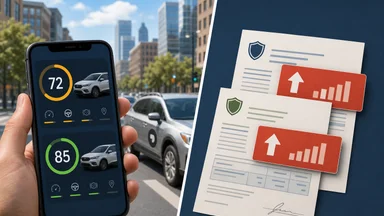
Modern auto claims rely heavily on telematics. Ride-share apps record speed, acceleration, braking force, and GPS location at intervals as short as one second. Vehicle EDRs capture similar data for the few seconds before and after a collision. Adjusters request both datasets, but the two may not align. The app's deceleration reading depends on the phone's accelerometer, which can be affected by phone placement. The EDR is more precise but only records if the vehicle's airbag control module detects a threshold event. In the Austin claim, the EDR recorded a deceleration of 0.72 g, while the app showed 0.6 g. The difference was enough for the commercial adjuster to argue that the driver had braked harder than necessary.
Police reports are another common source of conflict. Officers typically measure skid marks and estimate speed, but they rarely have access to telematics logs. In this case, the police report estimated the ride-share driver's speed at 25 mph and noted "sudden stop" based on the other driver's statement. The telematics data showed a steady deceleration from 22 mph. The adjusters had to reconcile these sources. The personal auto adjuster accepted the police report at face value. The commercial adjuster requested a forensic reconstruction, which cost roughly US$ 2,500 and added two weeks to the timeline.
State negligence laws dictate how fault is allocated. Texas follows a modified comparative fault rule: a claimant can recover damages only if they are less than 51 percent at fault. If the ride-share driver was deemed 50 percent responsible for the collision due to a sudden brake, the other driver's recovery would be reduced by half. The commercial adjuster had to evaluate whether a jury would view the braking as reasonable. That judgment depends on local case law, which varies by county. The adjuster consulted a legal database and concluded that a 50–50 split was likely, leading to a settlement offer of half the estimated bodily injury value.
How One Claim Reveals the Industry's Fragmented Decision-Making
The Austin claim is not unusual. A related article on this site, A Single Collision Claim Forced a Fleet Operator Through Three Independent Adjuster Reviews, describes a similar dynamic in commercial fleet insurance. The fragmentation stems from the product design itself: personal auto, commercial auto, and ride-share gap policies are sold by different divisions, often under different parent companies. Each division maintains its own claims department with separate systems, processes, and metrics.
Communication gaps are common. In the Austin claim, the personal auto adjuster sent a request for the EDR download without informing the commercial adjuster. The commercial adjuster made a separate request to the same vendor, causing a duplicate order and a delay. The ride-share company's adjuster assumed the other two would handle the liability investigation and did not proactively share the app telematics. By the time all three realized the gaps, three weeks had passed.
No single adjuster has a complete view of the claim. The personal auto adjuster sees only the driver's policy and vehicle damage. The commercial adjuster focuses on the other party's injuries and the ride-share company's exposure. The ride-share company's adjuster monitors the gap coverage but has limited authority over the commercial policy. The claimant, meanwhile, speaks to a different representative each time he calls. He is told that "the adjuster handling your claim is out of the office" or that "the file is under review." The lack of a single point of contact erodes trust and increases the likelihood of litigation.
From Disagreement to Settlement: The Escalation Path
When adjusters cannot agree, the claim escalates to supervisors. In the Austin case, the personal auto adjuster's supervisor approved the first-party payment but refused to influence the liability decision. The commercial adjuster's supervisor reviewed the telematics data and upheld the 50–50 fault assessment. The ride-share company's adjuster escalated to a claims manager, who requested a second opinion from a in-house engineer. That added another week.
If supervisors cannot resolve the dispute, the policies may require mediation or arbitration. Many ride-share gap policies include an arbitration clause for coverage disputes between insurers. The Texas claim did not reach that stage because the commercial adjuster eventually accepted a settlement within his authority limit—roughly US$ 8,000 for property damage and US$ 15,000 for bodily injury. The claimant accepted the offer in part because his rental car coverage had expired and he needed the money to repair his own vehicle.
The timeline from collision to settlement was 47 days. Industry benchmarks for ride-share claims average around 30 to 60 days, according to a 2023 study by the Insurance Research Council that analyzed claims data from three major ride-share platforms. Delays are more common when telematics data is disputed or when coverage periods overlap. Insurers are increasingly using artificial intelligence to flag claims with multiple coverage layers early, routing them to specialized units. Travelers' recent decision to drop its Personal Insurance Catastrophe Excess-of-Loss Reinsurance Treaty at July 1, 2026, reflects broader pressure on personal auto lines. Higher loss ratios in ride-share and gig-economy segments are pushing carriers to tighten underwriting and claims oversight.
What the Claimant Never Sees: Internal Metrics and Cost Pressures
Adjusters are evaluated on metrics that claimants never see: cycle time (days to close), indemnity spend (average payment per claim), and litigation rate. A personal auto adjuster who pays a claim quickly may exceed his indemnity budget. A commercial adjuster who holds out for a better deal may increase cycle time and provoke a lawsuit. The tension between speed and cost creates inconsistent behavior. In the Austin claim, the personal auto adjuster closed his portion in 12 days, well within his target of 15. The commercial adjuster took 35 days, exceeding his 25-day target but staying under his indemnity authority.
Ride-share insurers face higher loss ratios than traditional personal auto carriers. The gig-economy driver pool is riskier: younger drivers, more miles driven in urban areas, and higher claim frequency. A 2024 report by the National Association of Insurance Commissioners (NAIC) estimated the combined ratio for ride-share insurance at 112 percent, meaning carriers pay out more in claims and expenses than they collect in premiums. Reinsurers have responded by raising rates and tightening terms. SeyRe Global's promotion of Dinesh Salgadu to COO signals that reinsurers are focusing on operational efficiency to manage these pressures.
Claimants may accept lower offers to avoid the uncertainty of litigation. The Austin claimant settled for roughly 70 percent of the estimated bodily injury value because his attorney advised that a jury might assign some fault to the ride-share driver. The adjusters knew this. The commercial adjuster's authority allowed him to offer up to US$ 25,000 without supervisor approval, but he offered US$ 15,000, expecting a counter. The claimant countered at US$ 18,000, and they settled at US$ 16,500. The difference of US$ 1,500 saved the insurer roughly 6 percent of the indemnity spend, but it cost the claimant two additional weeks of negotiation.
Practical Lessons for Policyholders and Risk Managers
Ride-share drivers should carry explicit gap coverage that matches the periods defined by their platform. According to a 2023 survey by the Consumer Federation of America, about 40 percent of personal auto insurers now offer a ride-share endorsement, typically for an additional premium of US$ 10 to US$ 20 per month. Without it, a driver may have no coverage during Period 1, when the app is on but no ride is accepted. Drivers should also document any braking event immediately: a dashcam with forward and rear views can provide independent evidence that telematics data may miss.
Understanding which insurer handles which part of the claim can help policyholders set expectations. The personal auto insurer covers physical damage to the driver's vehicle. The ride-share company's commercial policy covers liability to third parties. If there is a dispute, the driver may need to coordinate with multiple adjusters. Requesting a single point of contact, if available, can reduce confusion. Some TPAs now assign a dedicated claims advocate for complex multi-policy claims.
Telematics data is not infallible. Policyholders can request the raw logs from both the ride-share app and the vehicle's EDR. If the data appears inconsistent, a forensic engineer can be hired independently. The cost—usually between US$ 1,500 and US$ 3,000—may be worth it if the claim is large. In the Austin case, the driver's personal policy covered the EDR download fee as part of the investigation, but many drivers do not know they can ask for it.
For risk managers at ride-share companies, the fragmented adjuster model is a cost of doing business, but it can be mitigated. Standardizing data-sharing protocols between personal and commercial carriers would reduce duplicate requests. For example, in 2024, the insurer Lemonade launched a pilot program with a major ride-share platform that integrates telematics data from both the app and the vehicle into a single dashboard accessible to all adjusters. Early adopters report cycle time reductions of 15 to 20 percent for multi-policy claims.
Conclusion: Trade-Offs in the Three-Adjuster Model
The three-adjuster model for ride-share claims reflects a fundamental tension in insurance: specialization versus coordination. Each adjuster brings deep expertise in their coverage layer, but the fragmentation creates delays, duplication, and frustration for claimants. The Austin case shows that even a straightforward rear-end collision can become a 47-day ordeal when three adjusters must agree on a single braking event.
Efforts to streamline the process—such as integrated platforms, dedicated claims advocates, and standardized data sharing—offer promise, but they also introduce trade-offs. Centralizing authority under one adjuster could reduce cycle times but may sacrifice the specialized knowledge that each layer requires. A personal auto adjuster may not be equipped to evaluate commercial liability, and a commercial adjuster may not understand the nuances of a gap endorsement. Similarly, sharing telematics data across carriers raises privacy concerns and requires costly system integration.
For policyholders, the practical takeaway is to prepare for fragmentation. Document everything, understand which policy covers which period, and be prepared to advocate for yourself or hire an attorney. For insurers, the challenge is to balance efficiency with expertise. The industry is moving toward automation and AI to flag multi-layer claims early, but the human judgment of adjusters remains essential—especially when a 0.12 g difference in deceleration can determine fault.
Ultimately, the three-adjuster model persists because it aligns with the way insurance products are sold and regulated. Until personal auto, commercial auto, and ride-share gap policies are integrated into a single product—a change that would require regulatory approval and significant industry coordination—claimants will continue to navigate a fragmented system. The Austin claim is not an anomaly; it is a feature of the current market structure.
This article is for informational purposes only and does not constitute insurance, legal, or financial advice. Policyholders should consult a licensed professional for guidance specific to their situation.